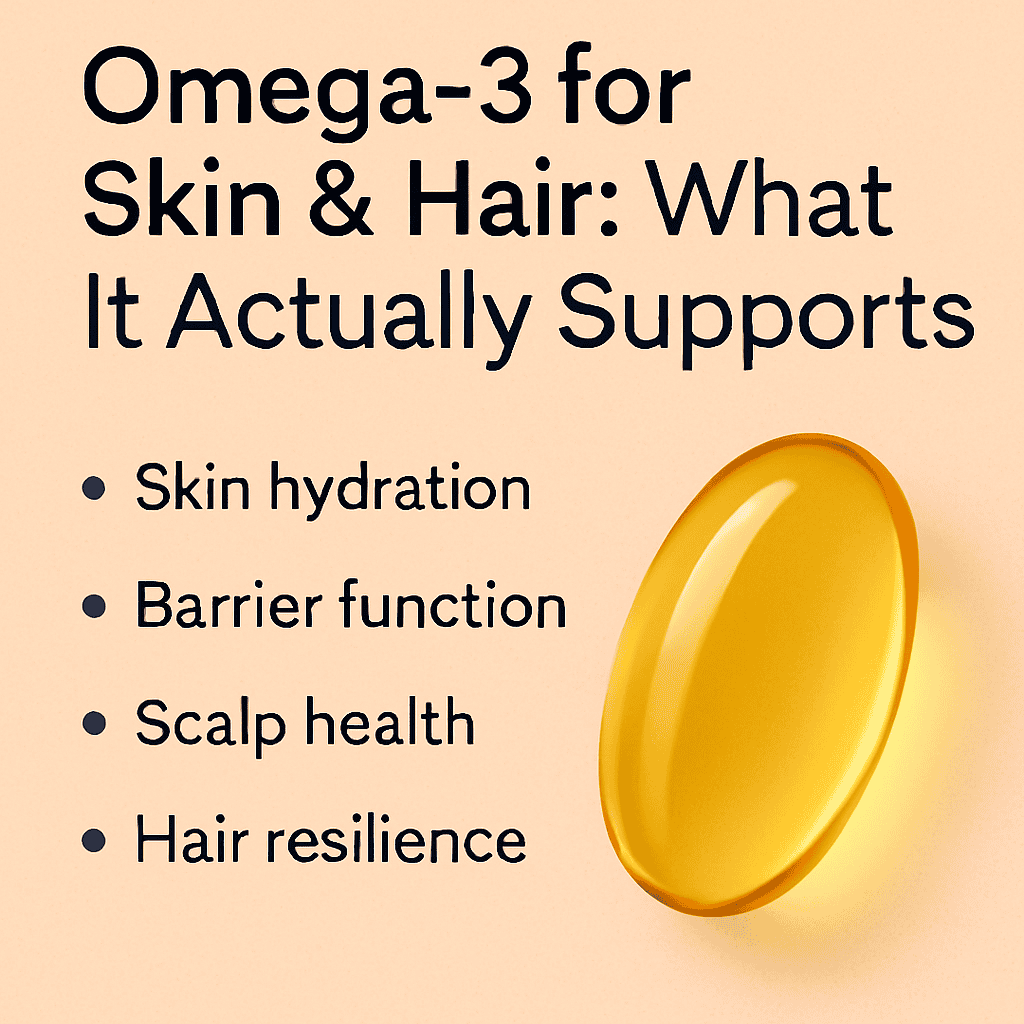
Omega-3 for Skin & Hair: What It Actually Supports
Omega-3s don’t work like cosmetics or “quick-fix” hair pills. Their role is quieter and more structural — supporting membranes, lipids, and signaling that influence hydration, scalp comfort, and how your skin and hair respond to everyday stress and dryness.
1) Quick overview: what Omega-3 supports for skin & hair
- Helps maintain your skin’s moisture barrier
- Supports balanced inflammatory signaling for calmer-looking skin
- Provides lipid building blocks that support the scalp/hair environment
- May reduce dryness and flakiness over time
- Can support smoother-feeling hair via scalp comfort and oil balance
The common theme: slow-and-steady improvements that come from consistent intake, not “beauty hack” intensity.
2) How Omega-3 supports the skin barrier
Your barrier is partly built from lipids — the “fats” that help keep water in and irritants out. EPA and DHA support the body’s ability to maintain that lipid structure.
- Smoother, more hydrated-looking skin
- Less “tightness” during dry weather
- A calmer, less reactive feel over time
3) Inflammation balance: why it matters for skin tone
Skin tone and texture are often linked to how your body manages everyday inflammatory signaling. Omega-3s support pathways involved in this balance — which is why some people notice:
- A calmer-looking complexion
- Less visible irritation from environmental triggers
- Smoother overall “baseline” tone
This isn’t treatment for skin conditions — it’s nutritional support for the systems that influence skin behavior.
4) How Omega-3 supports hair health
Hair doesn’t “absorb” omega-3 directly. Instead, omega-3s support the scalp environment and lipid balance that healthy-looking hair grows from.
- A more hydrated, less flaky-feeling scalp
- Support for scalp oil balance (which can affect hair feel)
- Less breakage risk when dryness is the main issue
5) Signs your skin or hair may be low in Omega-3
These don’t diagnose deficiency — but they show up often in low-intake patterns:
- Persistent dryness even with moisturizers
- Flaky scalp or tight-feeling skin
- Dull-looking tone
- Brittle hair that feels dehydrated
- More reactive skin during seasonal changes
6) How long until you notice changes?
When people notice changes, they usually describe them as subtle and cumulative:
- 3–4 weeks → slightly better hydration & softness
- 6–8 weeks → more consistent moisture and smoother texture
- 8–12 weeks → scalp comfort and hair appearance improvements
Omega-3s aren’t cosmetic actives — they’re structural nutrients. Quiet input, meaningful output.
7) Which Omega-3 form is best for skin & hair?
For visible effects, the main driver is your total EPA + DHA. Form can influence absorption and comfort — but consistency still wins.
- Excellent absorption
- Higher EPA + DHA per capsule
- Often the best long-term value per mg
- Phospholipid form + astaxanthin
- Smaller capsules (often gentler for sensitive stomachs)
Gentle product examples (optional)
No pressure — just clear examples that fit skin & hair routines.
Ideal if you want more EPA + DHA per capsule. A straightforward option for long-term hydration and scalp comfort support.
View at Nootropics Depot →A practical option if you simply want consistent EPA + DHA without overthinking brands or forms.
Shop on Amazon →Go Deeper (VerifiedSupps Guides)
If you want to connect skin, stress, sleep, and recovery into one calm routine, these guides tie it together.
Final takeaway: support the foundation, not just the surface
Omega-3s don’t act like topical products — their role is deeper. When your skin barrier and scalp lipids are supported consistently, skin tends to look calmer and hair often feels more resilient.