Magnesium Timing: Morning vs Night
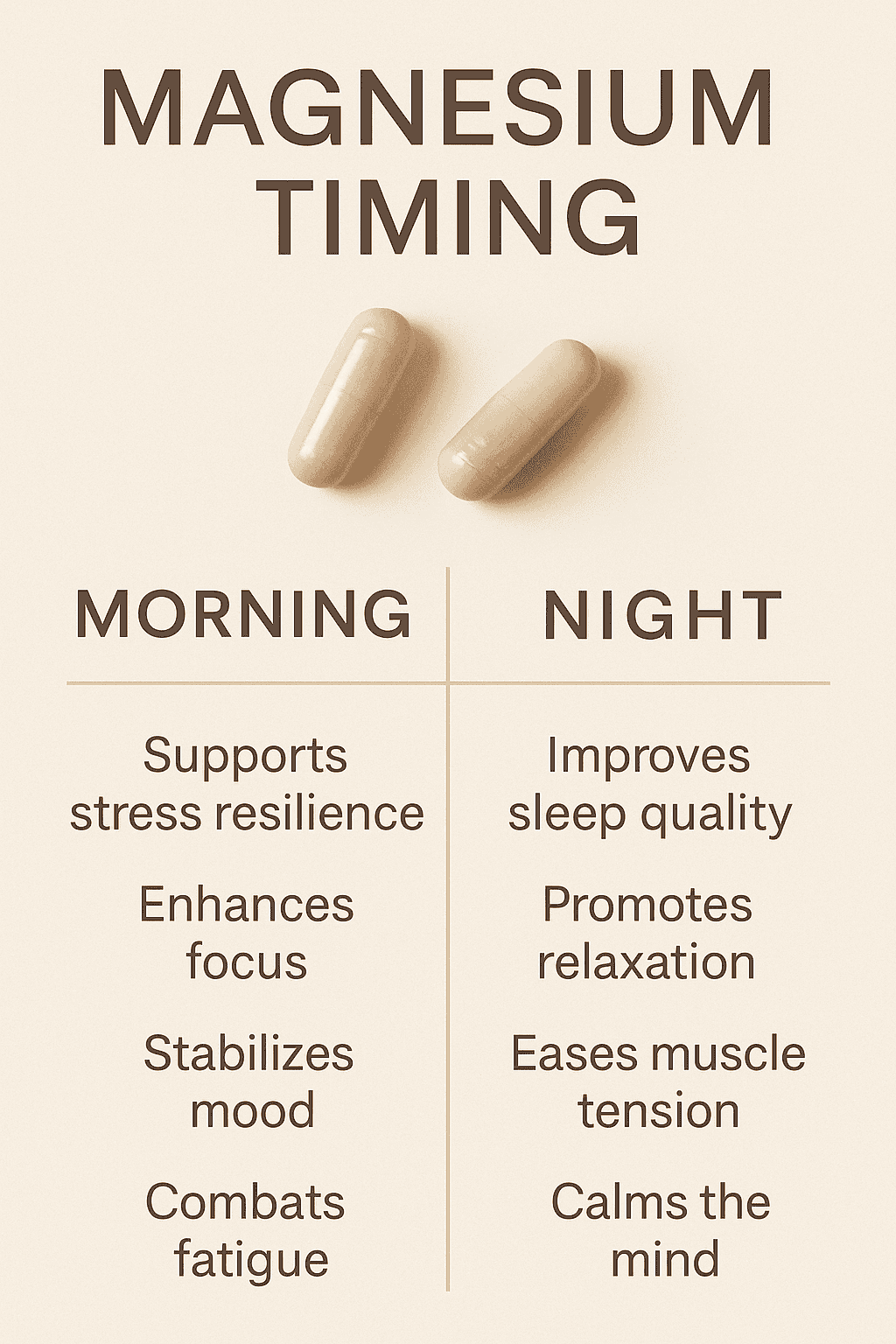
Magnesium is one of those nutrients you feel quietly — steadier evenings, smoother recovery, calmer mornings. But when you take it can change how it feels. Morning magnesium may support focus and stress tolerance. Evening magnesium may help your body downshift and make sleep feel more predictable.
1) Fast answer: morning vs night
- Take magnesium at night if your goal is sleep, calm, tension relief, or deeper relaxation.
- Take magnesium in the morning if your goal is steadier mood, stress tolerance, or smoother focus.
- Split your dose if you’re at ~300 mg+ total, or you want both daytime steadiness and nighttime wind-down.
2) Why magnesium timing matters
Magnesium influences nervous system tone, neurotransmitter activity, muscle relaxation, and sleep architecture. Those systems behave very differently in the morning versus late evening.
3) When to take magnesium at night
- Better sleep quality
- Smoother mood before bed
- Less muscle tension
- Calmer thoughts at night
- A more predictable wind-down routine
- Magnesium glycinate — gentle, calming, usually easy on digestion.
- Magnesium L-threonate — often chosen for brain wind-down and sleep depth.
4) When to take magnesium in the morning
- More stable stress response during the day
- Cleaner focus and mental clarity
- Less “wired” caffeine response
- Less irritability or tension
- Smoother energy curve
- Magnesium taurate — clean, calm, typically not sleepy.
- Magnesium glycinate — if your day carries stress or irritability.
- Magnesium citrate — if digestion support is part of the goal (and you tolerate it).
5) When to split your dose (AM + PM)
If you’re using magnesium for both daytime calm and nighttime relaxation, or if your total is in the higher range, splitting often feels more balanced.
- Half in the morning → steadier mood, focus, and stress resilience
- Half at night → smoother transition into sleep
6) Best timing for each form
7) Recommended magnesium options by timing (optional)
8) Who should be more careful with timing?
- People who get drowsy easily — avoid calming forms in the morning.
- Very sensitive digestion — citrate may be too stimulating early.
- Low blood pressure tendencies — magnesium may enhance relaxation too much.
- Reduced kidney function — dose and timing should be medically guided.
Go Deeper (VerifiedSupps Guides)
Final takeaway
If your goal is sleep and relaxation, move magnesium to the evening. If your goal is daytime steadiness, consider the morning (often with a “clean” form). If you want both — or higher doses feel heavy — split.