Magnesium for Sleep vs Anxiety: Why One Form Fails
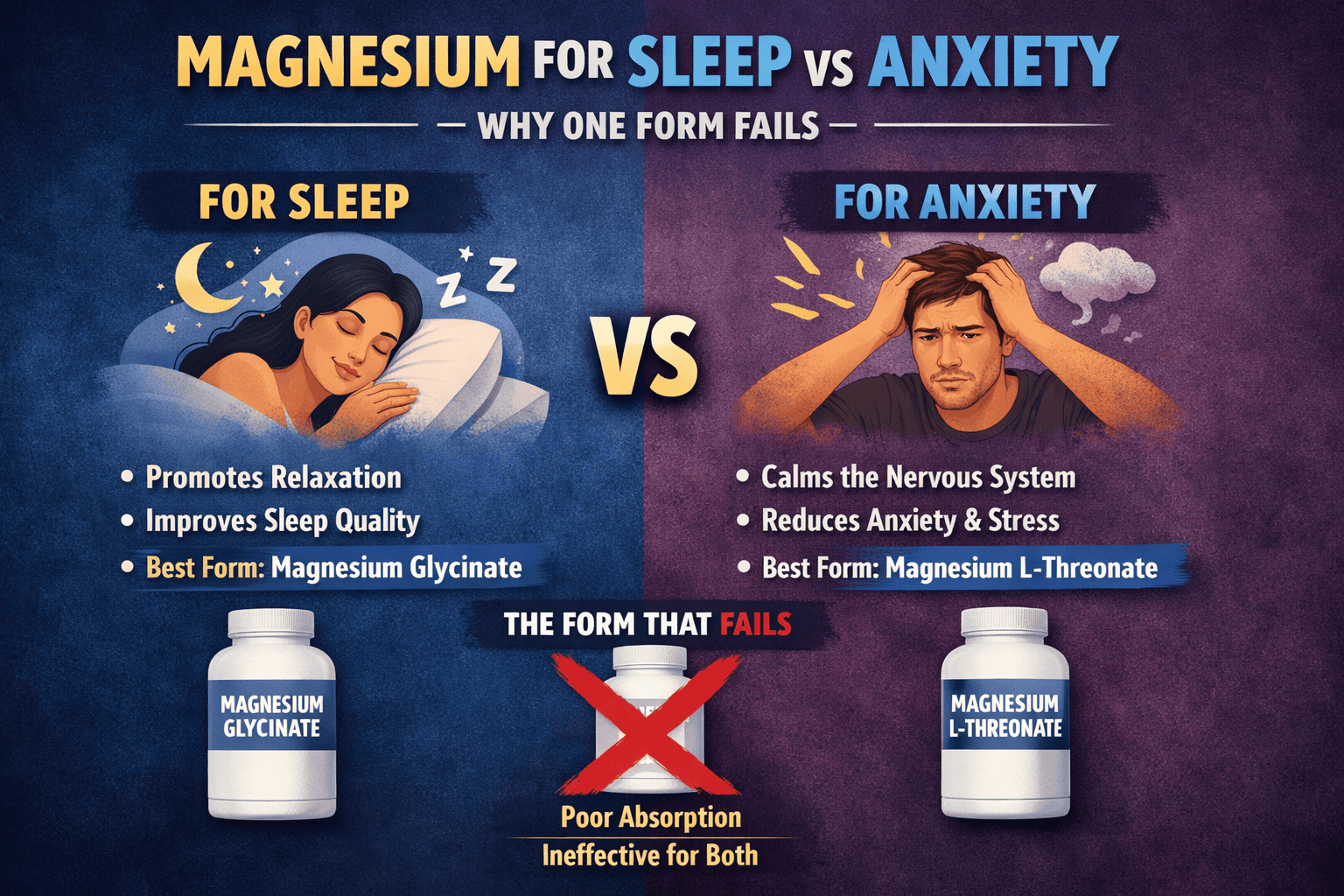
Magnesium can help sleep and anxiety — but it’s not “one thing.” The form you pick determines how it feels. A lot of people try one magnesium, feel nothing (or feel worse), and decide magnesium “doesn’t work.” Most of the time, it’s not magnesium. It’s a mismatch: wrong form, wrong dose, or wrong timing for the symptom.
First: “sleep” and “anxiety” aren’t single problems
Magnesium works best when you match the form to the pattern. If you don’t define the pattern, you’re basically guessing.
- Can’t fall asleep: mind won’t shut off
- Wake up a lot: light, fragmented sleep
- Tension sleep: body is tight, jaw/shoulders/legs won’t relax
- Physical anxiety: tight chest, tense body, wired baseline
- Cognitive anxiety: rumination, looping thoughts, “what if” brain
- Mixed: both (most common)
Why one form “fails” for sleep
Most magnesium failures for sleep are one of these:
The “sleep fix” is usually less dramatic than people expect: pick the form that matches the pattern, hit a consistent dose, and give it a real window (not one night).
Why one form “fails” for anxiety
Anxiety failures are usually a mismatch between physical vs cognitive anxiety. Magnesium can support both — but different forms tend to feel different in practice.
A simple “match the form to the pattern” rule
You don’t need to chase “the best magnesium.” You need the form that matches your pattern and a dose you can actually stick to.