L-Citrulline vs Beet Root: Two Nitric Oxide Paths, Two Different Feels
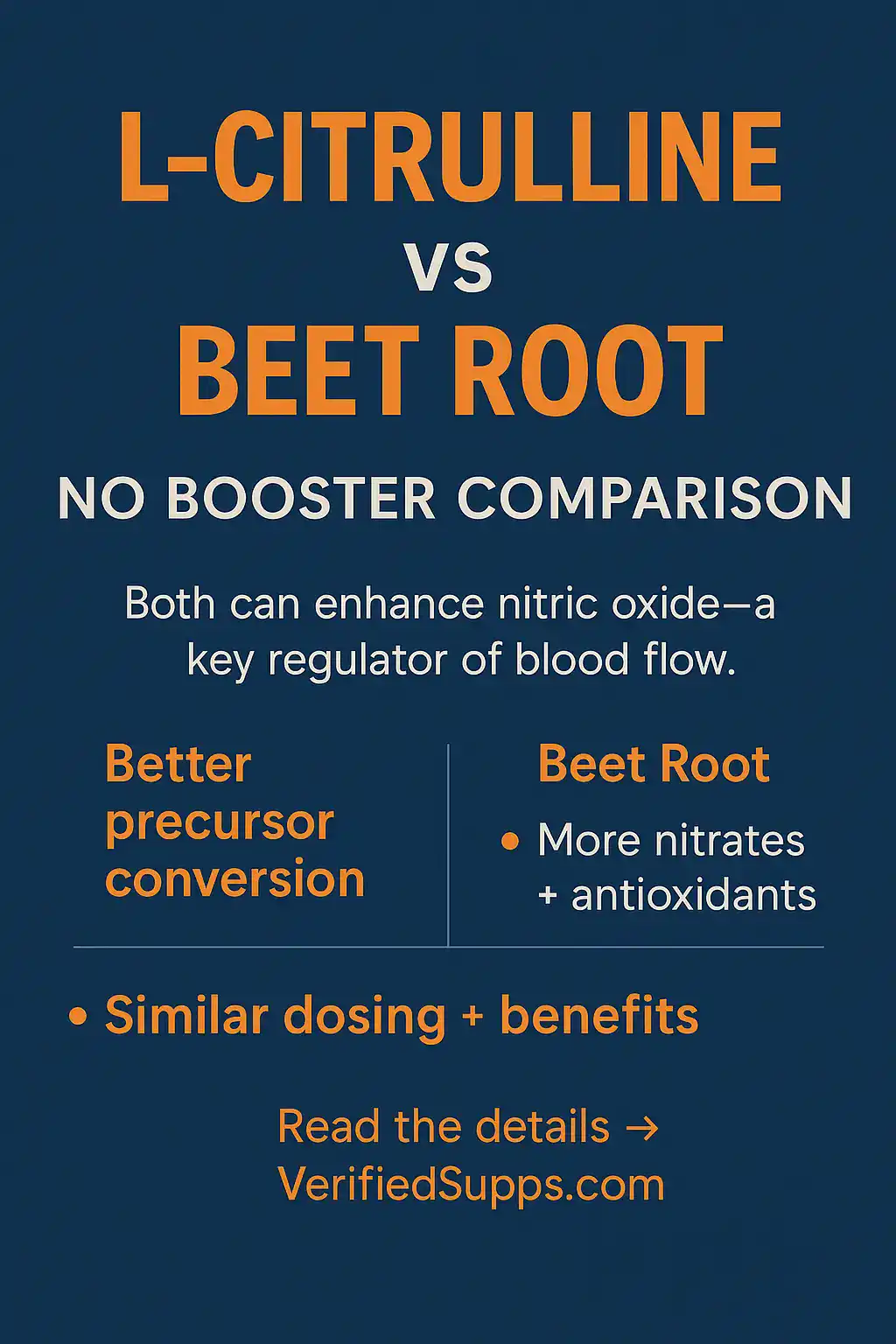
Both support nitric oxide, but through different routes. L-citrulline supports nitric oxide by improving arginine availability (citrulline → arginine → NO). Beet root supports nitric oxide through dietary nitrates (nitrate → nitrite → NO). That difference is why they “feel” different in the gym and during cardio.
This is the decision version: what each pathway does best, how to dose them, whether stacking makes sense, and why people sometimes feel nothing.
Quick Take
- Gym pumps + lifting output: citrulline is often the more consistent “pump tool.”
- Cardio stamina + lower perceived effort: beet root often shines here.
- Blood flow support overall: both can help, but the feel and timing differ.
- Stacking: many people stack them because they hit two NO pathways.
Safety note: if you use blood-pressure-lowering medications, nitrates, or PDE-5 inhibitors, be cautious with nitric-oxide-support supplements and confirm safety with a clinician.
Parent Hub: Want benefits, dosing, timing, comparisons, and safety in one place?
Open: L-Citrulline Complete Guide (VerifiedSupps)
Citrulline vs beet root: the fastest way to choose
Pick based on your goal and the kind of training you actually do.
| Goal | Best first pick | Why it tends to fit | Typical timing |
|---|---|---|---|
| Pumps and lifting output | L-citrulline | Arginine/NO support tends to feel steadier for resistance training | 30–60 min pre-workout |
| Cardio stamina and “lower effort” feel | Beet root | Nitrate → nitrite → NO pathway often stands out in endurance work | Often 2–3 hours pre (product-dependent) |
| Non-stim pre-workout “smooth output” | Either (or stack) | Two NO routes; stacking can feel more “complete” for some | Citrulline pre; beet earlier |
| Blood pressure/circulation support | Depends on tolerance | Both support NO; lifestyle factors often dominate the outcome | Daily consistency matters most |
If you want the “one sentence” version: citrulline usually feels more gym-pump oriented, beet root more cardio-efficiency oriented.
Is L-citrulline or beet root better for nitric oxide?
Neither is universally “better.” Citrulline supports nitric oxide by raising arginine availability, while beet root supports nitric oxide via dietary nitrates. They can both improve NO signaling, but the timing, feel, and best-fit use-case differ.
The important detail is that these are two separate routes to the same destination: smoother vessel relaxation and blood flow support.
L-citrulline vs beet root: which is better for pumps?
For many lifters, L-citrulline is the more consistent “pump” tool—especially at a real dose—because it supports the arginine/NO pathway in a way that tends to show up during resistance training.
What usually makes pumps show up
- Sufficient dose (underdosing is the most common failure).
- Hydration and sodium are not low.
- Training includes enough volume to create a pump signal.
- Glycogen matters: very low-carb/flat days can mute pumps regardless of NO support.
Is beet root better for cardio endurance than citrulline?
Often, yes—especially for steady-state or submaximal endurance work. Beet root’s nitrate pathway can be noticeable as lower perceived effort and smoother stamina, which is why runners and cyclists use it.
Citrulline can still support endurance, but the beet root “signature” tends to show up most clearly in cardio contexts.
Can you take L-citrulline and beet root together?
Yes—many people stack them because they support nitric oxide through two separate pathways. The goal is not “more stimulation,” but smoother blood flow support that can feel more complete in mixed training (lifting + conditioning).
A calm stacking approach
- Start with one for a week, then add the second (so you can tell what changed).
- Keep total “vasodilator load” reasonable if you’re sensitive to low BP feelings (lightheadedness).
- Medication context matters: be cautious if you use BP meds, nitrates, or PDE-5 inhibitors.
How much L-citrulline should you take vs beet root?
Citrulline dosing is usually straightforward (measured in grams). Beet root dosing is trickier because products vary in nitrate content, so “grams of powder” can mean different things depending on the extract and standardization.
Practical starting points
- L-citrulline (training focus): commonly 6–8 g pre-workout.
- L-citrulline (daily support): commonly ~3 g daily.
- Beet root: aim for a product that clearly communicates nitrate potency (or use a trusted standardized option).
If you’re testing beet root, be consistent with the same product so you’re not guessing whether the nitrate content changed.
Does beet root lower blood pressure more than citrulline?
Either can support blood pressure through nitric oxide pathways, but results vary and are often modest. Beet root’s nitrate route is commonly discussed in BP contexts, while citrulline is often used as an arginine/NO support tool. The bigger reality: sleep, stress, alcohol intake, sodium/potassium balance, and body weight trends often matter more than any single supplement.
If your blood pressure is consistently elevated, treat that as a clinician-guided problem first. Supplements can be supportive, not primary treatment.
Why you feel nothing from citrulline or beet root
“No effect” is usually dose, timing, or context. These supplements support physiology—you still need the conditions where that physiology matters (hydration, training volume, consistent intake, and realistic expectations).
Common mistakes (and fixes)
- Underdosing citrulline: many products include too little to notice, especially for pumps.
- Testing on a “flat” day: low hydration, low sodium, and low glycogen can mute pumps and performance.
- Beet root product variability: nitrate content can differ widely between powders and extracts.
- Timing mismatch: citrulline is often used closer to training; beet root often needs a longer lead time.
- Oral nitrate pathway interference: some people likely reduce nitrate → nitrite conversion by disrupting oral bacteria (product and habit dependent).
- Expecting a stimulant: “better blood flow” often feels smooth, not hypey.
A simple two-session test
- Pick one supplement and use a real dose with consistent timing.
- Train a session that normally creates pumps or shows endurance differences.
- Keep hydration and sodium normal so you’re testing the ingredient, not testing dehydration.
Selected Professional References
- PubMed: L-citrulline and exercise performance (systematic reviews)
- PubMed: beetroot/dietary nitrate and exercise performance (systematic reviews)
- PubMed: dietary nitrate and oral bacteria (conversion pathway)
- PubMed: nitric oxide and vascular function (reviews)
- PubMed Central: full-text research library
Go Deeper (VerifiedSupps Guides)
If you want the next step, these are the cleanest follow-ups.
Final Takeaway
Citrulline and beet root both support nitric oxide—but they’re not the same tool. If you want a steadier pump-and-output feel for lifting, citrulline is often the cleaner first pick. If you want smoother cardio stamina and lower perceived effort, beet root often stands out. If you want the “two-pathway” approach, stacking can make sense—just dose intelligently and keep safety context in mind.
FAQ
Is beet root better than L-citrulline?
It depends on your goal. Beet root often stands out for cardio efficiency, while citrulline often feels more consistent for pumps and resistance training output.
Can I take beet root and citrulline together?
Often yes, because they support nitric oxide through different pathways. Start with one first, then add the second so you can tell what’s helping.
How long does beet root take to work?
Timing varies by product and nitrate content. Many endurance users take it well before training rather than right at the start.
How long does L-citrulline take to work?
For workouts, many people take it 30–60 minutes before training. For daily support, consistency over time matters more than a single dose.
Do I need carbs to get a pump even with citrulline?
Carbs aren’t strictly required, but low glycogen often makes pumps harder to feel. Citrulline supports blood flow; glycogen and hydration shape the “pump signal.”
Which is better for blood pressure support?
Both can support nitric oxide pathways, but results vary and are often modest. Lifestyle factors and medical context typically matter more than any single supplement.
Can beet root or citrulline cause headaches?
Some people notice headaches, flushing, or lightheadedness—often dose-related. Lowering the dose or splitting it can help, and medication context matters.
What’s the biggest reason nitric oxide supplements “don’t work”?
Underdosing, poor timing, dehydration/low sodium, low training volume, and product variability (especially with beet root) are the most common reasons.