Blood Flow • Circulation • Nitric Oxide • Vascular Support
L-Citrulline for Blood Pressure: A Calm, Human Breakdown of How It Supports Circulation
There’s a certain kind of tension people feel that doesn’t show up on blood tests right away. The kind where your body feels “tight,” your chest feels heavy, or your circulation just doesn’t feel as smooth as it used to.
And somewhere in the middle of all that, someone says:
“Try L-Citrulline — it’s good for blood pressure.”
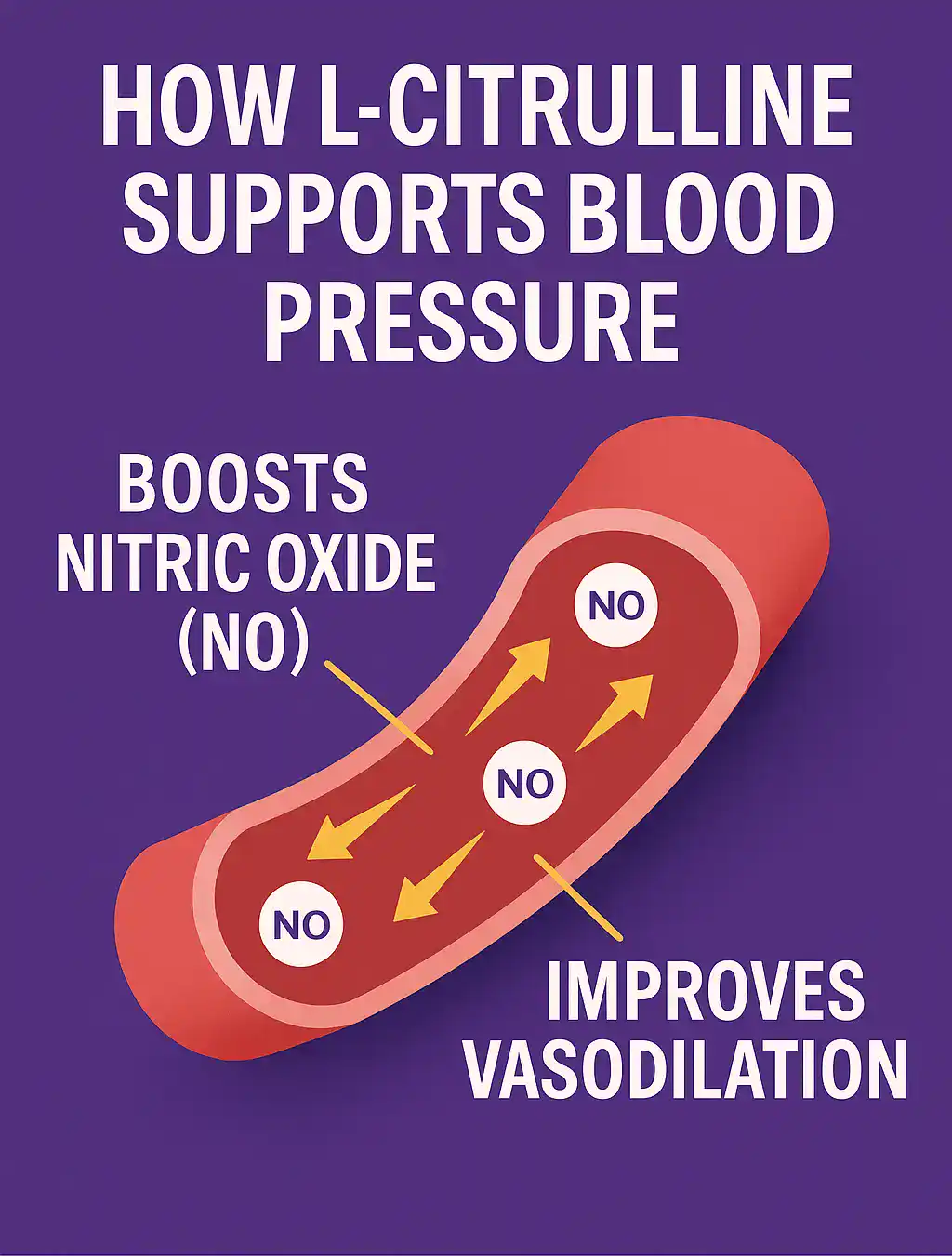
Quick answer: L-Citrulline supports healthy blood pressure and better circulation by boosting nitric oxide — a molecule that relaxes blood vessels and improves blood flow.
What it tends to support:
✔ opening/relaxing blood vessels
✔ smoother circulation
✔ healthier vascular “flexibility” (less stiffness)
✔ better oxygen delivery
✔ more efficient cardiovascular response under stress
Now we’ll make the science human — without the hype.
Parent Hub: For benefits, dosing, nitric-oxide science, timing, performance effects, and safety in one place: L-Citrulline Complete Guide .
This hub ties the whole citrulline topic map together.
1) How L-Citrulline Supports Blood Pressure
Healthy blood pressure depends heavily on how flexible and responsive your blood vessels are. When vessels are stiff or narrow, your heart has to work harder to push blood through — pressure trends upward.
Plain-English version: if the “pipes” are tight, the pump works harder. If the pipes relax, everything moves easier.
Nitric oxide is one of the key signals your body uses to relax blood vessels. L-Citrulline supports nitric-oxide production — which can help your vascular system dilate more smoothly.
This may support:
- more relaxed arteries
- smoother circulation
- better blood flow during stress
- improved cardiovascular efficiency
It isn’t a drug. It’s a gentle way to support your body’s existing ability to dilate.
2) Why Citrulline Often Works Better Than Arginine
Here’s the part that surprises people: taking arginine doesn’t always raise nitric oxide very well, because a lot gets broken down before it meaningfully reaches circulation.
L-Citrulline travels to the kidneys and is converted into L-Arginine there — which can raise nitric oxide more reliably for many people.
That usually means smoother blood flow support and a more predictable vascular response — even if the change feels subtle at first.
3) Circulation Support Isn’t Just “Heart Health”
Good circulation affects how your whole body feels day to day — not just what a number on a cuff says. When blood flow improves, tissues get oxygen and nutrients more smoothly.
People sometimes notice:
- warmer hands and feet
- less “pressure” sensation in the chest (when stress is the driver)
- smoother breathing during activity
- less “heavy” feeling in the limbs
- better endurance capacity
Core idea: better blood flow = tissues finally get what they’ve been asking for.
4) Stress-Induced Blood Pressure Spikes
If your blood pressure rises when you’re stressed, overwhelmed, stuck in traffic, over-caffeinated, or your anxiety feels “physical,” you’re not alone.
Citrulline doesn’t sedate you. It may simply help your vascular system stay more responsive and flexible — so the “tightening” response isn’t as sharp.
Nitric oxide rises → vessels relax → pressure can stabilize more naturally.
5) Long-Term Vascular Support
Research suggests citrulline may help support the systems that keep blood vessels functioning well over time — including vascular flexibility and endothelial function (the lining of blood vessels).
Framing that’s honest: not dramatic. Not a miracle. Just support where your body quietly needs it most.
6) How Much L-Citrulline Should You Take?
Educational, not medical advice.
General circulation support:
3–6 g daily
Blood pressure support approach:
3–6 g daily, sometimes split into 1–2 doses
Performance + circulation combo:
6–8 g pre-training (timing matters more for performance)
Key detail: it works best when taken consistently — nitric oxide support becomes more predictable.
7) Best Form for Blood Pressure Support
Use: pure L-Citrulline (clear dosing; no proprietary blends).
Citrulline malate can be great for workouts, but for circulation-focused use, pure citrulline is typically the cleaner, more direct option.
Side Effects & Safety
L-Citrulline is generally well tolerated.
Occasionally, people notice:
- warm flushing (from increased blood flow)
- mild stomach discomfort if taken dry
Important: If you take blood-pressure-lowering medications, nitrates, or PDE-5 inhibitors, talk with your clinician before using higher doses.
Quick Summary
- L-Citrulline supports nitric oxide, which helps blood vessels relax
- More relaxed vessels can support smoother circulation and healthy blood pressure
- For circulation-focused use, pure L-Citrulline is usually the cleanest option
- Common daily range for circulation: 3–6 g/day (consistency matters)
- Generally well tolerated; caution if you take BP medications or nitrate-related drugs
Go Deeper (VerifiedSupps Guides)
If you want the most helpful next steps, these pair naturally with circulation-focused citrulline use.