By VerifiedSupps Editorial Team
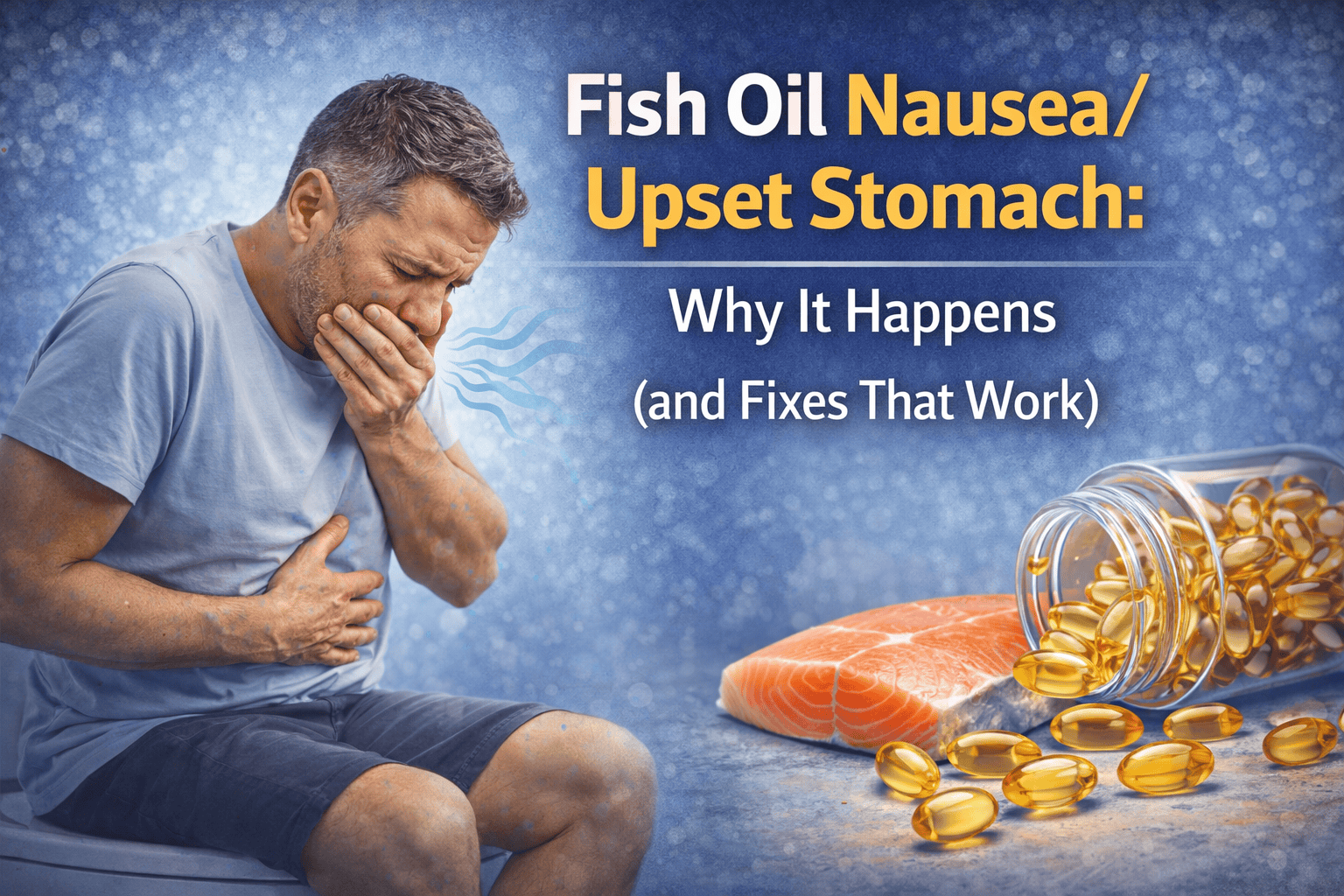
Fish Oil Nausea / Upset Stomach: Why It Happens (and Fixes That Work)
Yes, fish oil can make some people feel nauseous or leave them with an unsettled stomach. That usually does not mean something is seriously wrong, but it often means the dose, timing, or tolerance is off.
The most useful first fixes are boring but effective: take it with a real meal, lower the dose, and split the dose instead of taking your full daily amount at once. If that does not solve it, the product may simply not be worth forcing.
This page is specifically about fish oil nausea and upset stomach, not fishy burps, acid reflux, or the broader question of whether omega-3 supplements are worth taking.
Key terms: fish oil, omega-3, EPA, DHA, nausea, upset stomach, gastrointestinal side effects, dose splitting
Quick Take
Fish oil and other omega-3 supplements can cause nausea and stomach discomfort as mild gastrointestinal side effects. The cleanest first move is not to keep powering through it, but to reduce the dose, take it with food, and retest tolerance in a simpler way.
TL;DR decision
If fish oil keeps making you feel sick, take a step back and simplify the protocol before deciding omega-3s “do not work” for you. Smaller doses with meals fix a lot of these cases. If nausea keeps coming back anyway, stop forcing the supplement.
Evidence standard: human trials, dose ranges, guideline-level sources when available
Who this is for: people who want fish oil or omega-3 support but keep getting nausea, queasiness, or an unsettled stomach after taking it
Who this is not for: anyone with persistent vomiting, severe abdominal pain, dehydration, known fish or shellfish allergy concerns, or medication issues that need clinician input
Author: VerifiedSupps Editorial Team
Reviewed by: VerifiedSupps Editorial Team
Published: March 23, 2026
Updated: March 23, 2026
Last reviewed: March 23, 2026
Parent Hub
Omega-3 Complete Guide
Use the main omega-3 hub for the broad decision on benefits, forms, dosing, and whether fish oil supplementation makes sense for your goal at all.
Fish oil nausea decoder
Use this to decide whether the problem is probably dose, timing, or a sign you should stop and reassess.
| What you notice | Most likely issue | Best fix today | Retry or stop? |
|---|---|---|---|
| Queasy stomach right after a large dose | Too much fish oil at once | Lower the dose and split it with meals | Usually retry |
| Upset stomach when taken fasted | Poor stomach tolerance without food | Take it with a real meal | Usually retry |
| Nausea keeps returning even at a small dose | This product or supplement approach may not suit you | Stop and rethink whether you need the supplement | Often stop |
| Vomiting, severe pain, dehydration, or ongoing illness | This may be bigger than ordinary supplement intolerance | Stop and get medical advice | Stop |
Best next step (today): If fish oil made you nauseous, retry only after changing one variable at a time: take it with food, use a smaller dose, and split the dose if needed.
Can fish oil actually cause nausea or an upset stomach?
Yes. Nausea and stomach discomfort are recognized mild gastrointestinal side effects of omega-3 supplements. This is not just anecdotal. Official NIH and MedlinePlus guidance lists nausea, gastrointestinal discomfort, and related stomach symptoms among common side effects, and a safety review of prescription omega-3s found treatment-related gastrointestinal adverse events, including nausea, in some product groups.
Mechanism
- Fish oil is a concentrated fat load, and some stomachs simply tolerate that poorly.
- Bigger single doses are more likely to feel heavy or nauseating than smaller divided doses.
- Queasiness is often a tolerance problem before it is a “danger” problem.
Evidence direction: strong that nausea can occur; weaker for the idea that one universally “non-nauseating” fish oil form works for everyone.
Should you take fish oil with food, at night, or in smaller doses?
If fish oil makes you nauseous, taking it with a real meal is the best first move. Prescription omega-3 labeling explicitly tells patients to take the capsules with food, and the standard 4-gram daily amount can be taken once daily or split into two smaller doses.
That does not prove nighttime is magically better, but it does support the practical rule that the “best time” is usually the meal that lets you tolerate it best. For many people, that means not taking it on an empty stomach and not dumping the full day’s dose down at once.
What would change my recommendation: If you already tolerate fish oil well, you may not need to overengineer timing. But if nausea is the issue, food and smaller divided doses matter more than chasing a perfect clock time.
How much fish oil is too much if it makes you feel sick?
There is no single nausea threshold that fits everyone, but tolerance often gets worse as the dose gets more aggressive. Official sources note that omega-3 supplements up to about 5 grams per day of EPA and DHA combined appear safe when used as recommended, and prescription products commonly use 4 grams per day. But “safe” and “comfortable” are not the same thing.
If your nausea started after you increased the dose, that is your loudest clue. In a wellness context, there is usually no prize for forcing a dose your stomach clearly hates.
A good rule is simple: if you feel worse with more capsules, do not talk yourself into thinking it is just something you need to “push through.” Lower the dose first and see whether the problem disappears.
What fish oil nausea fixes actually work in real life?
The fixes that help most are usually simple and unglamorous. Take it with food, lower the dose, and split the dose instead of taking everything at once. Those changes line up with how official prescription omega-3 products are instructed to be used and how mild gastrointestinal side effects are typically managed in practice.
- Take fish oil during or after a real meal rather than fasted.
- Reduce the number of capsules per sitting if nausea started after a dose increase.
- Split the daily amount into two smaller doses when appropriate.
- If nausea keeps coming back anyway, stop treating the supplement like a must-have.
Why does fish oil upset your stomach and how do you test tolerance the smart way?
Most people do not need a complicated protocol here. They need a cleaner test. If nausea is real, change one variable at a time and find out whether the issue is simply dose and timing rather than abandoning omega-3s after one rough day.
Common mistakes
- Starting with a full multi-capsule dose instead of easing in.
- Taking fish oil without food when your stomach already runs sensitive.
- Changing dose, meal timing, and product all at once, so you never learn what helped.
Clean test protocol
| Inputs | One fish oil product only, lower starting dose than before, taken with a meal, with the full daily amount split if needed |
|---|---|
| Duration | 7 to 14 days before making a keep-or-stop decision |
| 3 metrics | Queasiness level, whether food clearly improves tolerance, and whether nausea only happens on dose days |
| Stop conditions | Persistent nausea, vomiting, worsening abdominal pain, dehydration, or symptoms that feel out of proportion to an ordinary supplement side effect |
How to tell it’s working
The best sign is simple: you stop dreading the capsules. Nausea drops, your stomach feels calmer, and the supplement becomes easy enough to take consistently without bargaining with yourself.
Red flags / seek care
Get medical advice if you have persistent vomiting, severe abdominal pain, dizziness from dehydration, blood in the stool, or symptoms that continue even after stopping the supplement.
Can you still get omega-3 benefits if supplements keep upsetting your stomach?
Yes. You do not have to force fish oil capsules if they repeatedly make you feel sick. NIH’s summary of American Heart Association guidance still supports one to two servings of seafood per week for cardiovascular benefit, especially when seafood replaces less healthy foods.
That does not replace prescription-strength omega-3 treatment when a clinician is using it for triglyceride lowering. But for general wellness, food-first omega-3 intake is a completely reasonable fallback if supplements keep upsetting your stomach.
Also be more cautious if you have fish or shellfish allergy concerns or take medications that affect clotting, because official sources note interaction potential and prescription labeling advises caution in people with fish or shellfish hypersensitivity.
Selected Professional References
These are the main sources behind the side-effect, timing, dosing, and safety points in this article.
Omega-3 Fatty Acids: Health Professional Fact Sheet
Supports nausea, GI discomfort, and diarrhea as common mild side effects, along with seafood guidance and interaction cautions.
Used for: side-effect confirmation, food-first fallback, safety context
Omega-3 Supplements: What You Need To Know
Clear official summary showing that nausea and related GI symptoms do happen with omega-3 supplements.
Used for: nausea and GI side-effect confirmation
Omega-3-Acid Ethyl Esters Capsule Labeling
Useful for official take-with-food guidance, 4-gram daily dosing, divided-dose instructions, and caution in fish or shellfish hypersensitivity.
Used for: with-food timing, dose splitting, safety cautions
Omega-3 Fatty Acids Drug Information
Another official source that lists nausea, stomach discomfort, vomiting, and diarrhea among possible side effects.
Used for: side-effect confirmation
Safety and Tolerability of Prescription Omega-3 Fatty Acids
Adds review-level context that gastrointestinal adverse events, including nausea, have been observed with some prescription omega-3 products.
Used for: evidence direction beyond consumer guidance
Go Deeper (VerifiedSupps Guides)
These next reads help if your issue is not just nausea, but broader fish oil tolerance, timing, or side-effect confusion.
Fish Oil Side Effects: What’s Normal and How to Fix It
Best next read if you want the bigger side-effect picture beyond nausea alone.
Fish Oil Burps and Fishy Aftertaste
Helpful if nausea comes with burping, aftertaste, or reflux-like symptoms.
Fish Oil Diarrhea and Loose Stools
Use this if your upset stomach is also turning into loose stools or urgency.
Best Time of Day to Take Omega-3
Best for meal timing, consistency, and smoother day-to-day tolerance.
Final Takeaway
Fish oil nausea is usually a tolerance problem with a practical solution, not something mystical you have to guess through. Start by taking it with food, lowering the dose, and splitting the dose if needed. If that still does not work, stop forcing the supplement and use a different omega-3 strategy.
FAQ
Can fish oil really make you nauseous?
Yes. Nausea is a recognized mild gastrointestinal side effect of omega-3 supplements.
Why does fish oil upset my stomach?
Usually because your stomach is not tolerating the current dose or timing very well, especially if you take it fasted or in a large amount.
Should I take fish oil with food if it makes me sick?
Yes. That is one of the most practical first changes to make.
Does splitting the dose help fish oil nausea?
Often yes, because smaller divided doses are usually easier on the stomach than taking everything at once.
How long should I retry fish oil before giving up?
About 1 to 2 weeks after changing dose and timing is usually enough to judge tolerance more fairly.
Is fish oil nausea a sign the supplement is dangerous?
Not usually. It is more often a mild tolerance issue, unless symptoms are severe, persistent, or come with red flags.
Can I just get omega-3s from fish instead?
Yes, especially if you are aiming for general wellness and supplements keep bothering your stomach.
Should I be more careful if I take blood thinners?
Yes. Omega-3 products can interact with medications, so use clinician or pharmacist guidance here.
When is nausea from fish oil a reason to seek medical care?
If it comes with persistent vomiting, severe abdominal pain, dehydration, or continues after stopping the supplement, treat it as a medical issue rather than a simple side effect.
VerifiedSupps Medical Disclaimer
This article is for educational purposes only and does not replace medical advice. Fish oil and omega-3 supplements can cause mild gastrointestinal side effects such as nausea or stomach discomfort, but persistent vomiting, severe pain, dehydration, or symptoms that continue after stopping the supplement deserve medical evaluation. If you take anticoagulants, have a known fish or shellfish allergy concern, or use prescription omega-3 products, use clinician guidance instead of self-experimenting blindly.