Creatine and Hair Loss: What the Evidence Actually Says
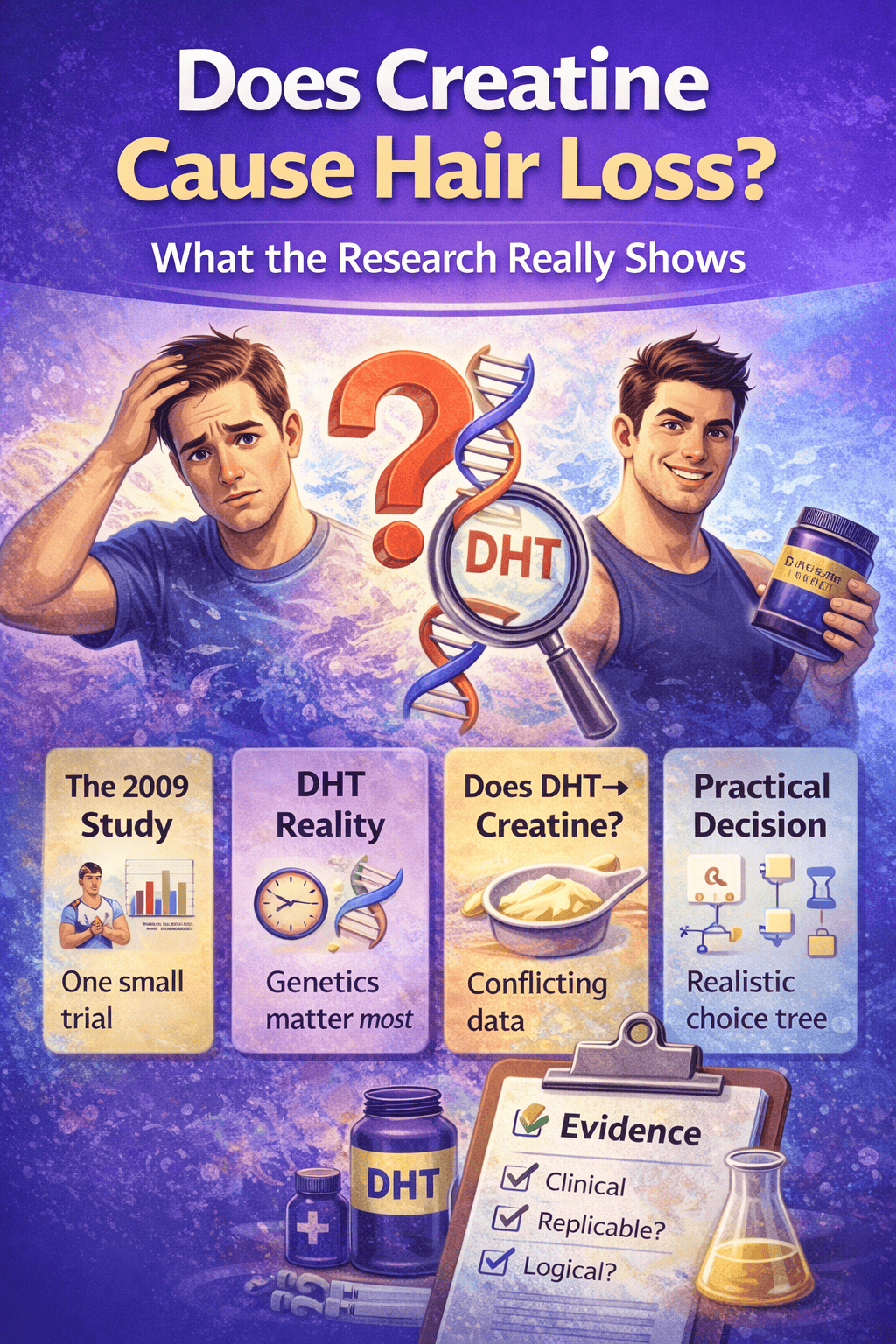
Most “creatine hair loss” discussions trace back to a simple chain: creatine → DHT → hair loss. It sounds tidy. The clinical question is different: does creatine meaningfully change hair outcomes in real people?
Where the Concern Started: The 2009 DHT Study
The “creatine causes hair loss” narrative largely originates from a small 2009 study in college-aged rugby players that measured hormones during creatine supplementation.
- Testosterone did not significantly increase.
- DHT increased after a loading period.
Key limitation: hair outcomes were not assessed. The study observed a hormonal signal, not clinical hair thinning or progression.
Replication Reality: What Later Trials Do (and Don’t) Show
Since 2009, creatine has been studied extensively for performance and safety. Many trials measure testosterone, and some include androgen markers, but:
- Hormonal effects are not consistently reproduced across studies.
- Hair loss outcomes (shedding rate, density, standardized photos, dermatologist scoring) are rarely measured.
So the evidence gap is straightforward: even if DHT shifts in some contexts, we still lack controlled data showing meaningful, predictable hair changes attributable to creatine.
Mechanism: Where DHT Fits — and Why Genetics Drives the Outcome
DHT (dihydrotestosterone) is produced from testosterone via 5α-reductase. In androgenic alopecia, hair follicles in susceptible scalp regions respond to androgens with progressive miniaturization over time.
Two clinically relevant points:
- Susceptibility is genetic. People without androgen sensitivity do not typically develop androgenic alopecia from normal hormonal variation.
- Magnitude matters. Small, transient shifts in circulating hormones do not automatically translate into measurable follicle changes.
In other words: DHT is important biology, but “DHT moved” is not the same as “hair loss occurred.”
Who Creatine Is (and Isn’t) a Good Fit For
- Strength and power training
- People who benefit from creatine’s established performance effects
- Those without significant hair-loss anxiety
- You have active, distressing shedding and high anxiety about it
- You’re highly concerned due to strong family history of androgenic alopecia
- You prefer minimizing any unproven hormonal variables
If You’re Concerned: A Rational, Low-Noise Approach
- Prefer maintenance dosing (commonly 3–5 g/day) rather than aggressive loading.
- Track changes calmly (weekly perspective, not daily panic checks).
- If anxiety is high, consider a simple pause-and-observe window (8–12 weeks) to reduce uncertainty.
- If hair loss is progressing, consider discussing evidence-based options with a clinician or dermatologist.
This approach keeps the decision clinical: minimize variables, observe outcomes, and avoid over-attributing normal shedding cycles to a single change.
Selected Scientific References (External)
High-quality sources used to inform this article:
- van der Merwe J, Brooks NE, Myburgh KH. Three weeks of creatine monohydrate supplementation affects dihydrotestosterone to testosterone ratio in college-aged rugby players. Clin J Sport Med. 2009. PubMed
- Kreider RB, et al. International Society of Sports Nutrition position stand: safety and efficacy of creatine supplementation in exercise, sport, and medicine. J Int Soc Sports Nutr. 2017. PubMed
- Overview of androgenic alopecia biology (androgen sensitivity and follicle miniaturization concepts). PubMed
Go Deeper (VerifiedSupps Guides)
Final Takeaway
The claim “creatine causes hair loss” rests on a hormonal observation in a small study — not on controlled evidence demonstrating hair thinning, shedding acceleration, or androgenic alopecia progression attributable to creatine.
If creatine meaningfully improves your training, current evidence does not support fear-based avoidance. If you’re genetically predisposed and concerned, skip loading, use a conservative maintenance dose, and monitor calmly over time rather than reacting to normal shedding variability.