Best Magnesium Supplement: How to Choose the Right Form (No Hype)

Magnesium · Calm · Sleep · Recovery

Best Magnesium Supplement (Buyer’s Guide)

Magnesium is one of those supplements you notice quietly in the background: sleep feels smoother, your nervous system feels less “on,” and those random twitches can calm down. The problem is the shelf — glycinate, threonate, taurate, citrate, oxide — and the labels rarely explain what the form actually changes.

Quick Take
For most people, magnesium glycinate is the best all-around choice. L-threonate is the “brain + sleep depth” pick. Taurate is great for calm days. Citrate is usually more of a digestion/budget tool than a calm/sleep form.
🧭
The Complete Magnesium Guide
Benefits, dosage, timing, forms, safety, cramps, sleep, anxiety — tied together in one calm, practical hub.
Open the master guide

1) Fast picks (so you don’t have to scroll forever)

Best overall for calm + sleep: Magnesium Glycinate
Best for brain + sleep depth: Magnesium L-Threonate
Best for calm days / anxiety: Magnesium Taurate
Best budget + digestion support: Magnesium Citrate
You’ll get the “why,” the feel, and the simplest way to dose each option below.

2) How to read a magnesium label (without getting tricked)

Many bottles list something like “2,000 mg magnesium glycinate”. That’s usually the compound weight — not the amount of magnesium your body actually gets.

  • Elemental magnesium = the real magnesium per serving (often 100–200 mg).
  • Form = how it tends to feel (glycinate vs threonate vs citrate matters).
  • Dosing = 1–3 capsules commonly lands around 100–400 mg elemental/day.
Simple rule: ignore the huge “compound” number. Find the elemental magnesium line.

3) Best magnesium supplements (calm, sleep, brain & budget)

Quiet examples — optional, not prescriptions. These match the use-cases in this guide and exist to save you time.

🔬
Premium Pick · Daily Calm & Sleep
Nootropics Depot Magnesium Glycinate
Chelated glycinate designed for absorption and gentle digestion. A strong everyday choice for calmer evenings, muscle relaxation, and smoother sleep.
View at Nootropics Depot
🛒
Best Overall · Amazon
Magnesium Glycinate (Calm & Sleep)
A simple glycinate option if you want less evening tension and better sleep without overthinking forms.
View on Amazon
🧠
Best for Brain & Sleep Depth
Magnesium L-Threonate
Designed to reach the brain more efficiently. Often chosen for memory support, mental clarity, and deeper-feeling sleep.
View on Amazon
😌
Best for Daytime Calm
Magnesium Taurate
A calm-days formula often chosen for stress support and a steady, non-drowsy feel.
View on Amazon
💰
Best Budget & Digestion Support
Magnesium Citrate
Budget-friendly and often useful for occasional digestion support. Usually not the first choice for deep calm or sleep if your stomach is sensitive.
View on Amazon

4) Which magnesium form fits your situation?

Magnesium Glycinate — best first choice
Well-absorbed, gentle on digestion, and fits perfectly into calm + sleep routines.
  • Best for: sleep, anxiety, muscle tension
  • Feels like: smoother evenings, fewer random twitches
  • Good starter approach: begin low and increase slowly
Magnesium L-Threonate — brain & sleep architecture
Designed to reach the brain more efficiently. Often used for memory support and deeper-feeling sleep.
  • Best for: cognitive support, sleep depth
  • Feels like: mentally cleaner evenings; sometimes vivid dreams
Magnesium Taurate — calm days & gentle heart support
A common daytime choice if you want steady calm without feeling sedated.
  • Best for: all-day calm, stimulant sensitivity
  • Feels like: smoother days, fewer stress spikes
Magnesium Citrate — budget & digestion
More gut-active. Helpful if constipation is part of the picture — less ideal as a primary calm/sleep form for sensitive stomachs.
  • Best for: budget, occasional digestion support
  • Watch for: loose stools at higher doses

5) Powerful calm stacks: magnesium + L-theanine + ashwagandha

Magnesium often feels more “complete” when paired with neurotransmitter support (L-theanine) and longer-term stress support (ashwagandha).

Calm evening stack (a common real-world combo)
  • Magnesium glycinate → muscles + nervous system relaxation
  • L-theanine → smoother thoughts + mental ease
  • Ashwagandha (Shoden®) → longer-term stress resilience
L-Theanine · Amazon
L-Theanine for Smooth Calm & Focus
Great if your restlessness is more mental than physical. Works well with magnesium at night or with coffee in the morning.
View on Amazon
🌙
Shoden® Ashwagandha · Amazon
Shoden Ashwagandha for Stress Resilience
A standardized ashwagandha extract designed for deeper, long-term stress support. Pairs well with magnesium glycinate at night.
View on Amazon

6) Who should be more careful with magnesium?

Magnesium is generally well-tolerated, but extra caution (or medical guidance) makes sense if you have:

  • Kidney disease or significantly reduced kidney function
  • Medications that affect heart rhythm or electrolyte balance
  • Very low blood pressure tendencies
  • Frequent loose stools (citrate can worsen this)
If you’re unsure, start low — and talk with a clinician before higher doses.

Final takeaway: choose the form that matches your goal

If you want the cleanest start: choose glycinate, take it consistently, and adjust slowly. If you want a brain-leaning option, consider threonate. If your stress shows up in the daytime, taurate can feel smooth and non-sedating. Citrate is best saved for digestion support and budget priorities.

The “best” magnesium is the one you’ll actually stick with. Start low. Go steady. Judge it by sleep quality and how your body feels.

Frequently Asked Questions

Which magnesium form is best for sleep?
For most people, magnesium glycinate is the best sleep-focused choice because it’s well absorbed and gentle on digestion. L-threonate is also popular for brain support and deeper-feeling sleep, but it’s typically more expensive and often provides less elemental magnesium.
Which magnesium form is best for anxiety or daytime calm?
Glycinate and taurate are common choices. Glycinate is the best all-around option. Taurate is often chosen for daytime stress or stimulant sensitivity because it tends to feel clean and non-drowsy.
Is magnesium citrate good for sleep?
Citrate is usually more helpful for digestion and general intake. It’s not the best sleep option because it can be more active in the gut. Glycinate, threonate, or taurate tend to be better for relaxation.
Can I take magnesium with L-theanine or ashwagandha?
Yes — this is one of the most common calm and sleep stacks. Magnesium supports muscle and nervous-system relaxation, L-theanine smooths mental chatter, and ashwagandha supports longer-term stress resilience.
How much magnesium should I take per day?
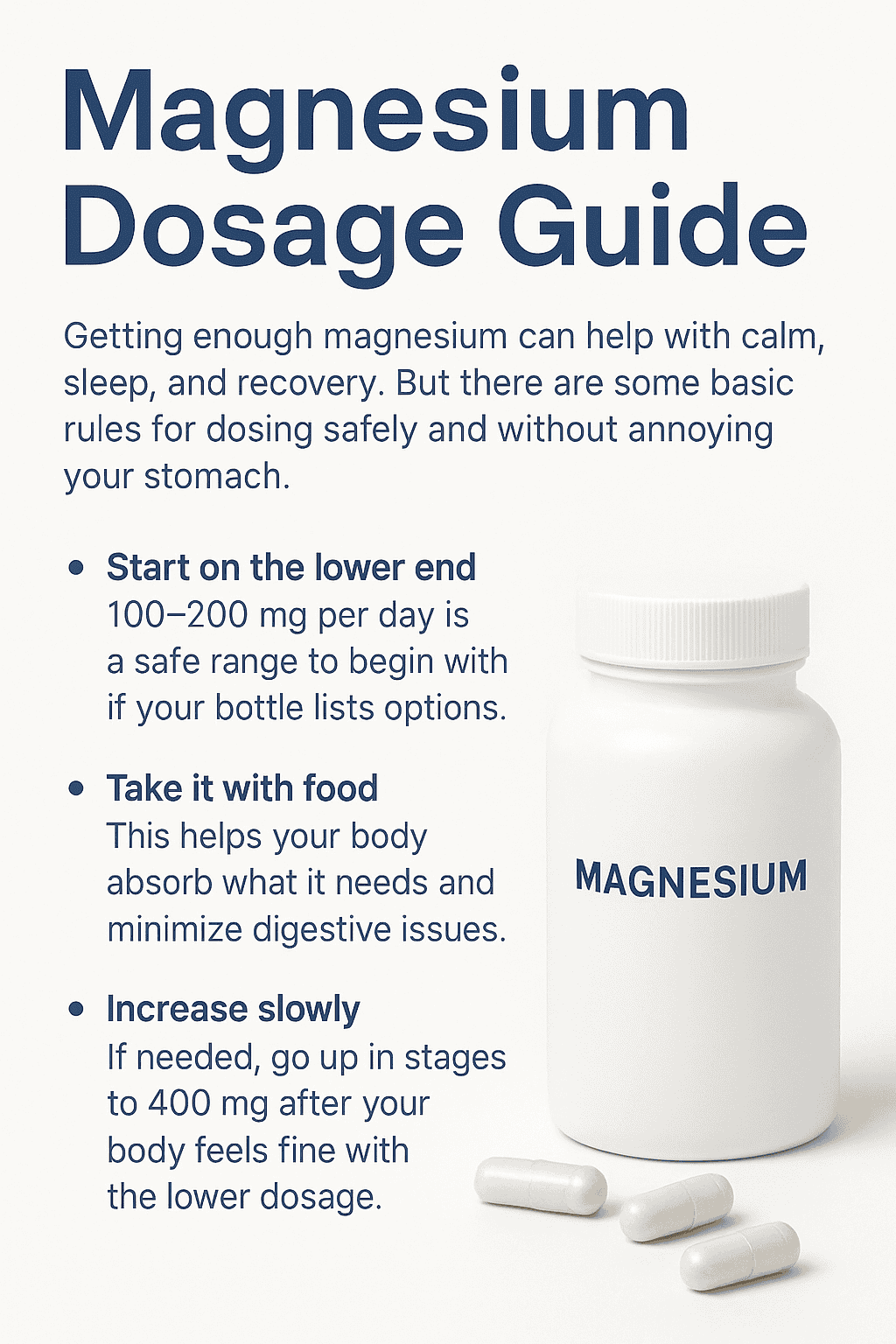
Many adults aiming for calm, recovery, or sleep support use 100–400 mg elemental magnesium per day.
  • Start on the lower end
  • Take with food for better tolerance
  • Increase slowly if needed
Your body’s response matters more than chasing a number.
Who should be careful with magnesium supplements?
People with kidney issues, those using medications that affect heart rhythm or electrolytes, individuals with very low blood pressure, or frequent loose stools should talk with a healthcare professional before higher-dose magnesium.
VerifiedSupps Medical Disclaimer
This content is for educational purposes only and is not intended to diagnose, treat, cure, or prevent any disease. Always consult a qualified healthcare professional before starting any supplement — especially if you have medical conditions, take medication, are pregnant, or are nursing.

Related Articles

Health

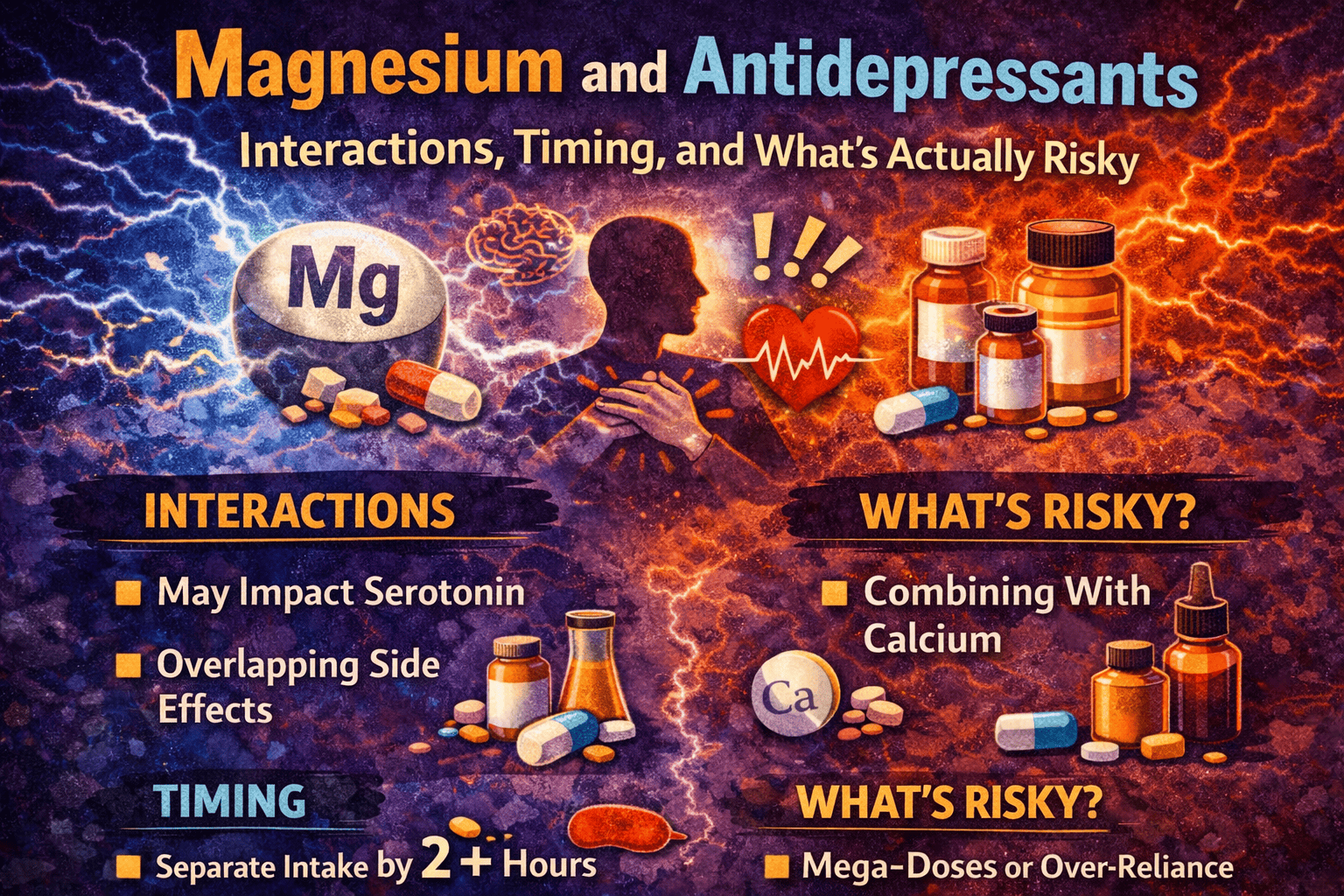
Magnesium and Antidepressants: Interactions, Timing, and Safety

Magnesium · Antidepressants · Timing · Risks Can You Take Magnesium With Antidepressants? Timing, Interactions, and Risks Direct answer: In most people, yes. Magnesium doesn’t usually “interact” directly with SSRIs the way some drugs do. Most concerns are about side effects overlap (sedation, GI effects) and timing/spacing—often because of other medications you take alongside an

Read More »
Health

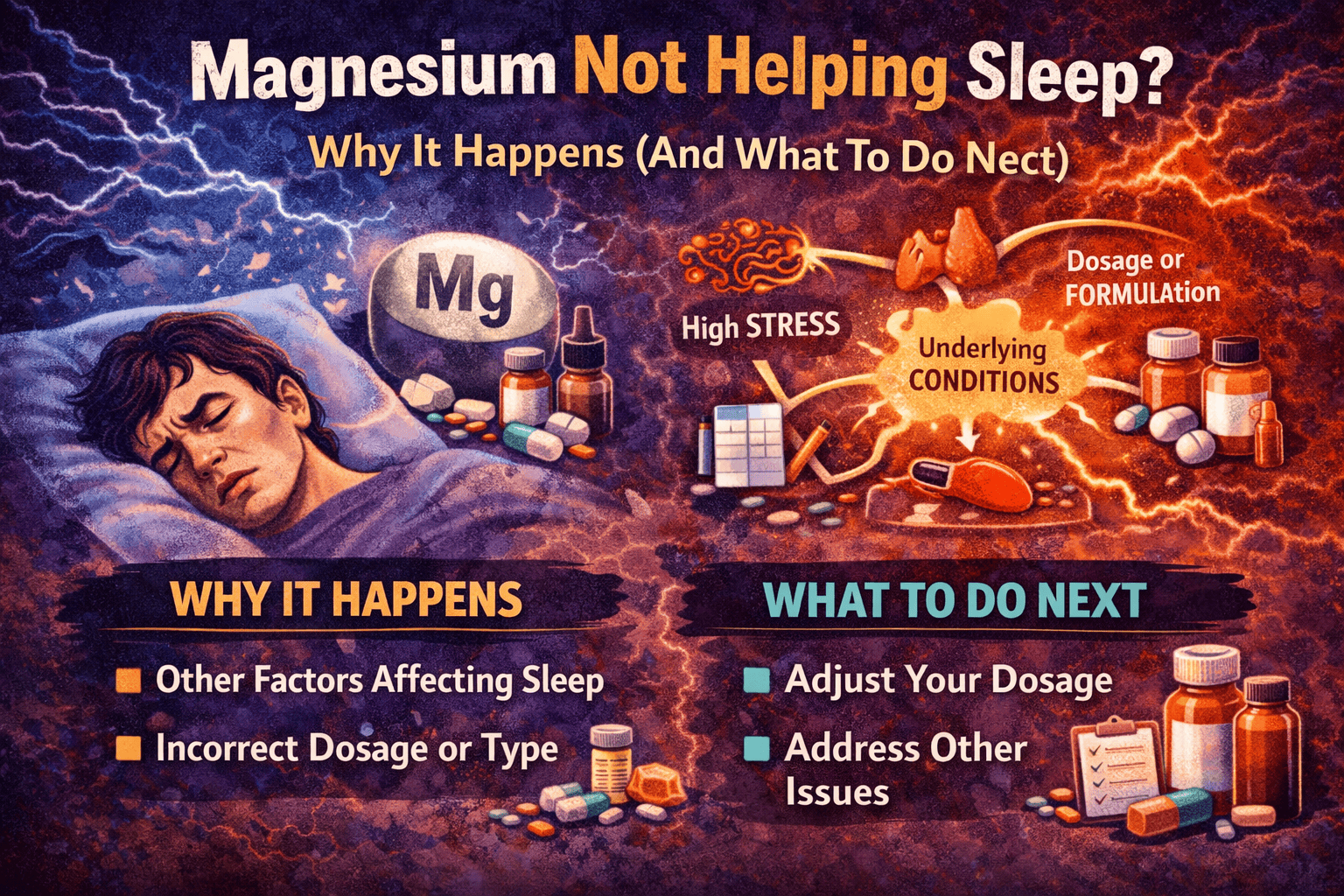
Magnesium Not Helping Sleep? Causes + Fixes (Form, Dose, Timing)

Magnesium · Sleep · Insomnia Logic Magnesium Not Helping Sleep: Why It Happens and What To Do Direct answer: it’s common for magnesium to “do nothing” for sleep. Magnesium helps sleep indirectly by lowering arousal and tension—not like a sedative. If your insomnia is driven by circadian timing, sleep-disordered breathing, stimulants, pain/reflux, or an anxiety

Read More »
Calm & Focus

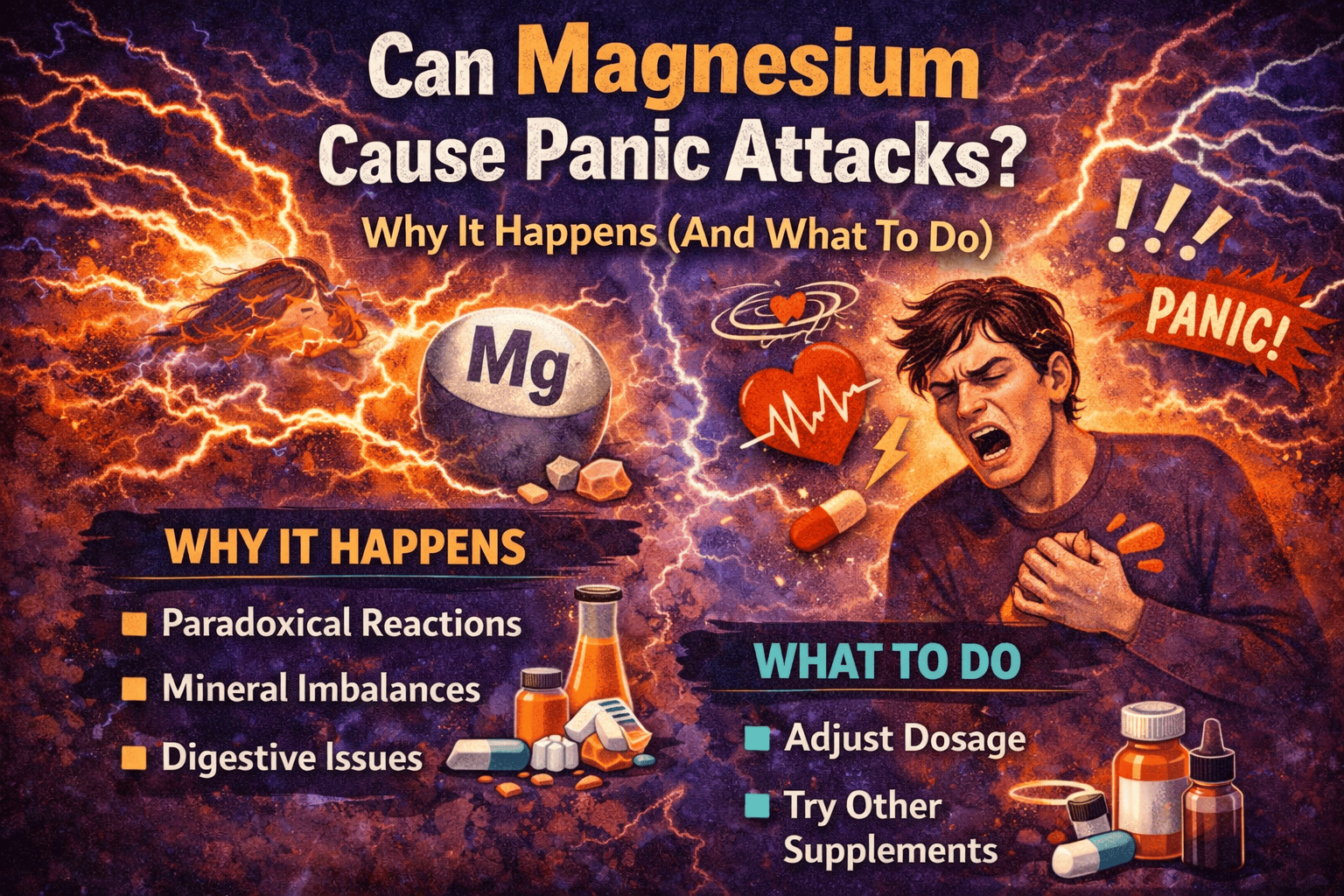
Can Magnesium Cause Panic Attacks? Causes, Fixes, and When to Stop

Magnesium · Panic Attacks · Anxiety Can Magnesium Cause Panic Attacks? Why It Happens + What to Do Direct answer: It can in some people, usually due to dose, timing, form, or stacking—not toxicity. It can feel like panic even if it’s just a body signal (GI discomfort, lightheadedness, “heart feels loud”) that your brain

Read More »