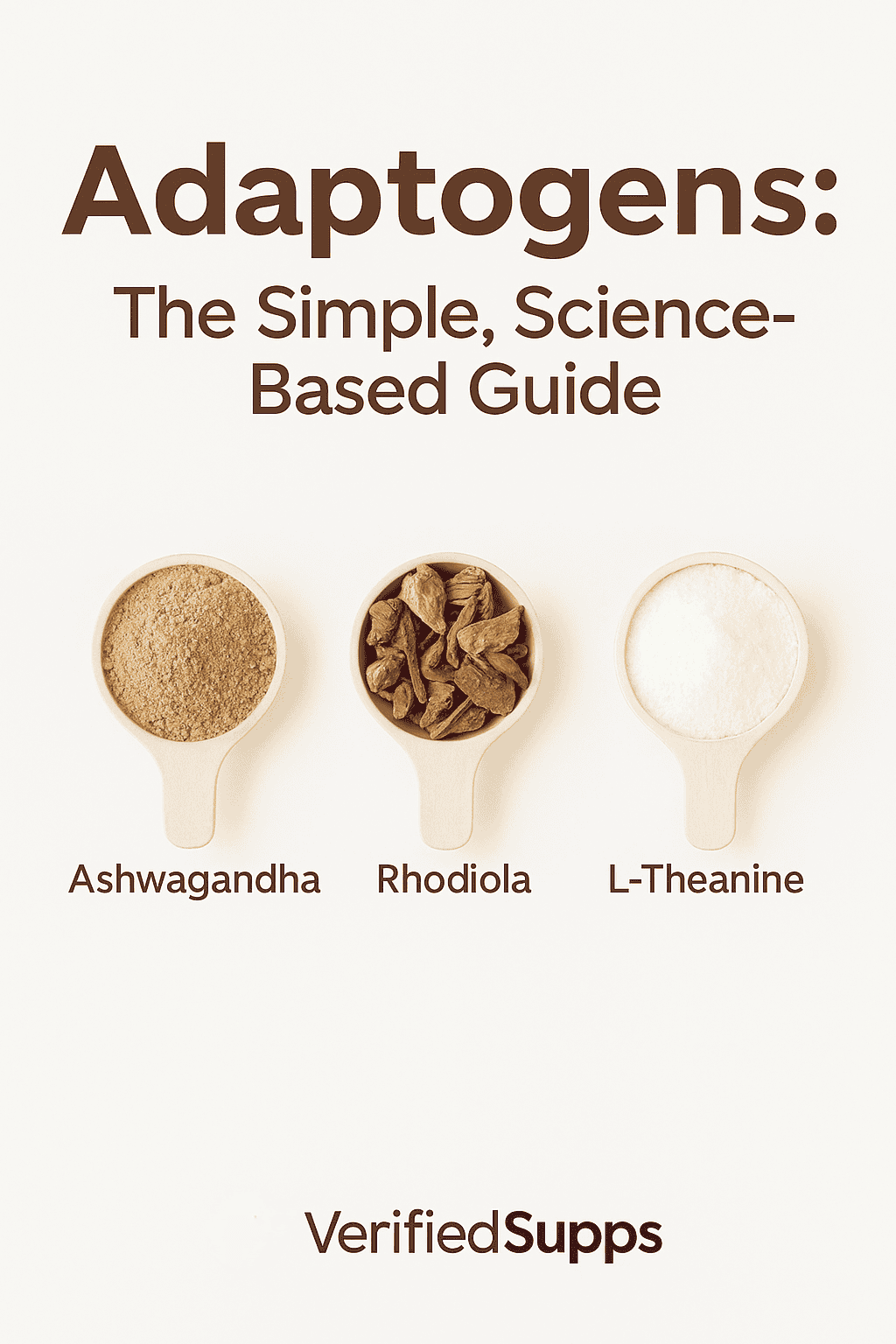
Adaptogens: The Simple Stack for Calm Energy and Stress Resilience
If your stress response feels overworked, adaptogens can help you feel steadier—without sedation. The most practical way to use them is not “take everything.” It’s to match the adaptogen to your stress pattern: ashwagandha for chronic stress load, rhodiola for stress-fatigue, and L-theanine for fast calm focus.
This guide is decision-first: what adaptogens are, which ones are worth trying first, how to dose them cleanly, and what to change if you feel worse.
- Best starter trio: ashwagandha + rhodiola + L-theanine.
- Fastest feel: L-theanine (often within an hour).
- Best for stress-fatigue: rhodiola (earlier in the day).
- Best for chronic stress load: ashwagandha (judge over weeks).
Adaptogen decoder: match the herb to your stress pattern
Most “adaptogens don’t work” stories are just mismatches. Use your pattern to choose the first lever.
| If you feel… | Try first | What it usually feels like | Common mistake |
|---|---|---|---|
| Tired but tense / chronic stress load | Ashwagandha | Steadier baseline over weeks | Mega-dosing too fast |
| Stress + fatigue / afternoon crash | Rhodiola | Calm energy, less mental drag | Taking it too late (sleep disruption) |
| Overthinking / caffeine edge | L-theanine | Quieter mind, smoother focus | Chasing more caffeine instead of smoothing it |
| Burnout season / high workload weeks | Rhodiola + theanine (day) + ashwagandha (night) | More stable output across the day | Changing three variables per day |
What are adaptogens?
Adaptogens are herbs traditionally used to support stress resilience—often described as helping the body “adapt” to stressors. In practical terms, people use them when they want calmer stress response and steadier energy without sedation.
Best adaptogens for stress and anxiety
For most people looking for stress resilience, the highest-ROI options are ashwagandha (chronic stress load), rhodiola (stress fatigue), and L-theanine (fast calm focus).
Ashwagandha for stress: what dose works best?
A common studied range for standardized extracts is 300–600 mg/day. The best strategy is to start conservative and judge over weeks, not days.
Rhodiola for fatigue and burnout: how to take it
Rhodiola is commonly used earlier in the day for calm energy and mental endurance. Many people do best with a standardized extract and a conservative dose.
- 200–400 mg/day, earlier in the day
- If sleep worsens, reduce dose or take it earlier
- Expect “calm energy,” not a stimulant hit
L-theanine with adaptogens: does it stack well?
Yes—L-theanine is often used as the “smoother.” It can reduce mental noise and help adaptogens feel more balanced, especially if you’re sensitive to stimulation.
How long do adaptogens take to work?
Some effects can feel quick (theanine), but adaptogens are usually judged over 1–8 weeks depending on the herb and your baseline stress load.
- L-theanine: often within 30–90 minutes
- Rhodiola: some feel it in days; steadier baseline in 1–2 weeks
- Ashwagandha: often 2–8 weeks for full “baseline shift”
Simple adaptogen routine for calm energy
- Start with one variable: pick ashwagandha (chronic stress) or rhodiola (stress fatigue).
- Add theanine as a stabilizer: use it on high-stress days or with caffeine.
- Run it 2–4 weeks: keep other variables stable so you can judge the signal.
- Stop rules: consistent worsening, sleep disruption you can’t fix with timing, or any safety concern.
Why adaptogens “don’t work”
- Wrong pattern match: using rhodiola when you’re already overstimulated, or ashwagandha when you mainly need daytime energy.
- Timing problems: rhodiola too late can disrupt sleep, which erases benefits.
- Too many changes: stacking multiple herbs at once makes outcomes impossible to interpret.
- Expecting instant results: many people need weeks for a stable baseline shift.
Selected Professional References
External sources for studies and mechanistic context (no internal links here).
Final Takeaway
If you want calm energy and stress resilience without sedation, keep it clean: ashwagandha for chronic stress load, rhodiola for stress fatigue, and L-theanine for fast calm focus (especially with caffeine). Run one change at a time and judge over weeks—not one day.