By VerifiedSupps Editorial Team
Fish Oil and Acid Reflux: Why It Happens (and How to Fix It)
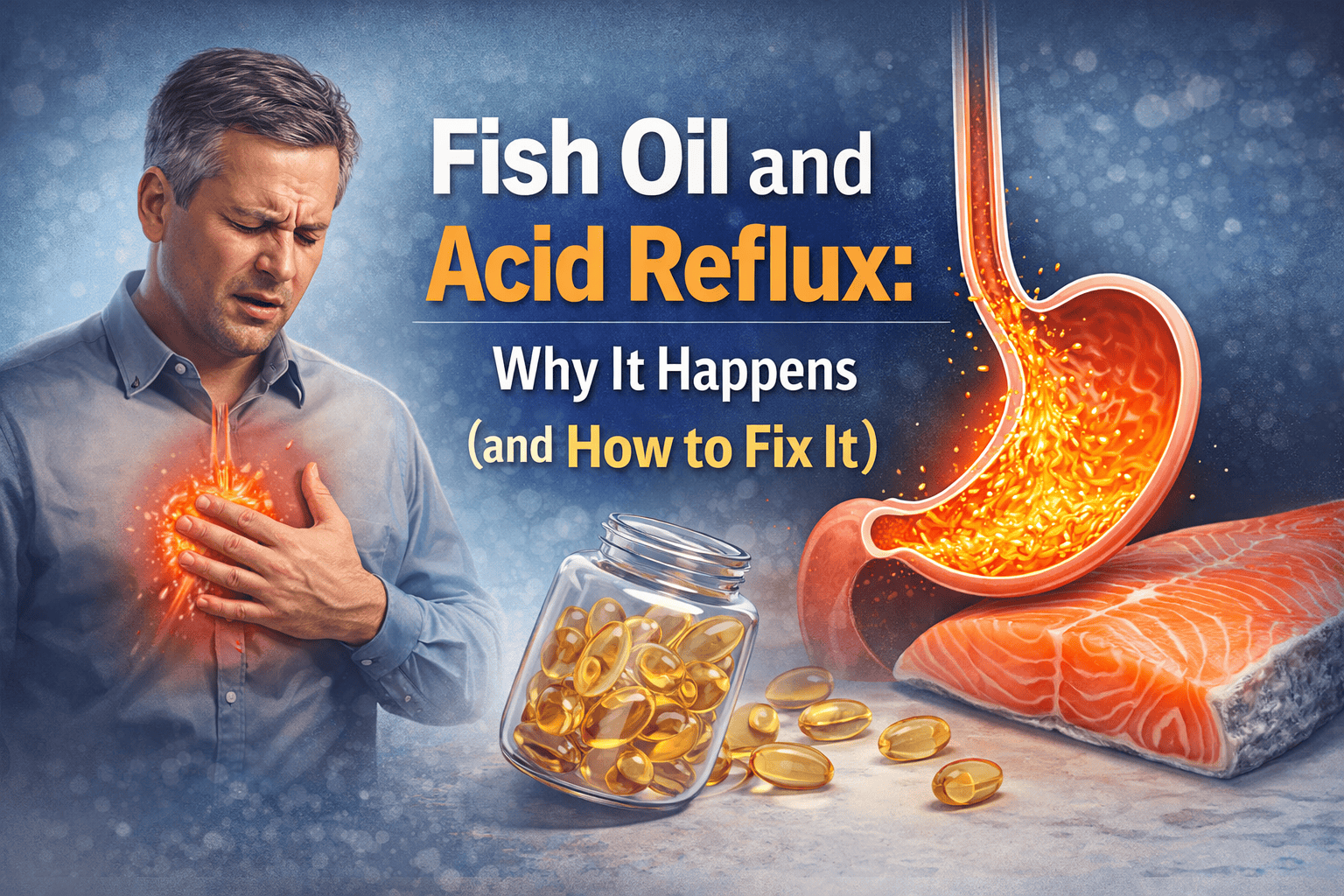
Yes, fish oil can cause acid reflux or reflux-like symptoms in some people. The most common pattern is not a dangerous reaction. It is burping, heartburn, sour stomach, or that “fish oil is repeating on me” feeling — especially if you take a big dose, take it at the wrong time, or already tend toward reflux. Official medical sources list burping, heartburn, stomach discomfort, nausea, and similar GI symptoms among the mild side effects people can get with omega-3 supplements.
The good news is that reflux from fish oil is usually very fixable. The cleanest fixes are usually smaller doses, taking it with a meal, moving it earlier in the day, avoiding bedtime dosing, and making sure the formula itself is not part of the problem.
This page is focused specifically on reflux, heartburn, sour stomach, and burping from fish oil. It is not the full general fish-oil benefits page or a broad omega-3 dosing guide.
Key terms: fish oil reflux, fish oil heartburn, fish burps, sour stomach, omega-3 side effects, timing, with food, enteric coating
Quick Take
Fish oil reflux is usually a tolerability problem, not a sign you are “doing damage.” The most reliable fix path is simple: take it with a meal, reduce the dose, split the dose, move it away from bedtime, and stop pretending a big capsule on an empty stomach should feel fine just because the ingredient is healthy.
TL;DR decision
If fish oil is giving you reflux, the first move is usually not to quit omega-3 entirely. It is to fix dose size, meal timing, and bedtime use. If it still clearly causes heartburn after a clean re-test, stop forcing it.
Evidence standard: human trials, dose ranges, official safety sources, and medication labeling when available
Who this is for: people who get heartburn, sour stomach, fish burps, or reflux-type symptoms after fish oil
Who this is not for: anyone with severe chest pain, vomiting blood, black stools, trouble swallowing, unexplained weight loss, or significant ongoing reflux without medical evaluation
Reviewed by: VerifiedSupps Editorial Team
Last reviewed: 2026-03-17
Parent Hub
Omega-3 Complete Guide
Use the full guide if you want the broader picture on omega-3 benefits, dose, timing, and product forms. This page stays tightly focused on reflux, heartburn, and GI tolerance.
Fish oil reflux fast-check table
Use this to identify the likely cause of your fish oil reflux before you throw out the whole category.
| Your pattern | Most likely driver | Best first fix | When to stop experimenting |
|---|---|---|---|
| Fish burps or sour repeat after capsules | Large dose or poor timing | Take with a real meal and split the dose | If it still happens consistently after a clean re-test |
| Heartburn mostly when you take it at night | Lying down too soon after dosing | Move it to breakfast or lunch | If reflux remains even with daytime meals |
| Nausea or upper-stomach discomfort | Empty stomach or dose too large | Reduce dose and take with food | If it clearly worsens or feels persistent |
| Strong chest burning, worsening reflux, or red-flag symptoms | Could be more than simple supplement intolerance | Stop fish oil and reassess medically if needed | Chest pain, trouble swallowing, black stools, vomiting blood, weight loss |
Best next step (today): If you take fish oil at bedtime, your first fix is usually to stop doing that.
Can fish oil cause acid reflux?
Yes. Official medical sources for omega-3 supplements list burping, heartburn, stomach discomfort, nausea, and similar GI symptoms as mild side effects that can happen. That does not mean fish oil is unsafe for most people. It means some people simply do not tolerate the way they are taking it.
Mechanism
- Large oily capsules can “repeat” on you and create burping or fishy aftertaste.
- A large single dose is often harder to tolerate than a smaller split dose.
- Taking it close to bedtime can make reflux more noticeable if you are already prone to it.
Why does fish oil cause reflux or fish burps?
Usually it is a tolerance problem, not a mystery. The most common reasons are dose too large, taking it on an empty stomach, taking it too close to bed, or using a product that just does not sit well for you.
Plain-English version
If fish oil is coming back up, your gut is telling you the delivery method is wrong even if the ingredient itself is still potentially useful.
How do you stop fish oil reflux fast?
The first-line fixes are boring because they work: take it with a meal, lower the dose, split the dose, and move it earlier in the day. Prescription omega-3 labeling and Mayo Clinic drug information support taking certain omega-3 products with meals, which fits what many people notice in practice for tolerance.
Most useful first fixes
Take it with lunch or dinner, split the total amount into lunch or dinner, split the total amount into two smaller servings, and stop using bedtime as your test window.
Should you take fish oil with food or at night?
If reflux is the problem, with food wins and nighttime usually loses. Medical sources for prescription omega-3 products commonly advise taking them with meals, and that lines up with the basic real-world fix: a meal often makes upper-GI tolerance easier, while lying down soon after a dose often makes reflux more obvious.
Best default
Breakfast or lunch is often cleaner than bedtime if reflux is already part of your pattern.
Is enteric-coated or triglyceride fish oil better for reflux?
Sometimes people do tolerate certain formats better, but the bigger reflux lever is still timing and dose size. A different form can help, but it is not a guaranteed reflux fix. If the product is huge, late, or used on an empty stomach, changing the label style alone usually does not solve the real problem.
Better way to think about form
Form can help at the margins. Meal timing and dose size usually help first.
When should you stop fish oil because of acid reflux?
Stop if the reflux clearly persists even after a clean re-test with food, lower dose, split dosing, and earlier timing. Also stop and get medical help if the “reflux” pattern includes chest pain, trouble swallowing, black stools, vomiting blood, or unexplained weight loss. At that point you are outside the normal fish-oil side-effect conversation.
Why is fish oil still causing reflux even with food?
If fish oil still causes reflux after you take it with food, the usual remaining problems are dose size, bedtime timing, or the simple fact that you personally do not tolerate that product well. Taking it with food is helpful, but it is not magic.
Common mistakes
- Taking a very large total amount all at once.
- Using it at dinner and going to bed soon after.
- Trying to “test tolerance” during an already reflux-prone week.
- Keeping the product even though every clean setup still gives the same result.
Clean test protocol
| Inputs | Use the same fish oil, but take a smaller amount with breakfast or lunch instead of a large bedtime or empty-stomach dose. |
|---|---|
| Duration | Three to five days is usually enough to tell whether the cleaner setup actually changes the reflux pattern. |
| 3 metrics | 1) burping or fish repeat, 2) heartburn or chest burning, 3) nausea or upper-stomach discomfort. |
| Stop conditions | Stop if symptoms are clearly persistent, clearly worsening, or if the pattern seems more like true reflux disease than a simple supplement side effect. |
How to tell it’s working
The “working” version usually means less or no fish repeat, less upper-GI burn, and fewer nausea or sour-stomach episodes. If the cleaner setup still fails, the product may simply not be worth forcing.
Red flags / seek care
Seek medical evaluation for chest pain that does not clearly behave like mild heartburn, trouble swallowing, black stools, vomiting blood, unexplained weight loss, or reflux that is becoming frequent and persistent regardless of supplement timing.
Selected Professional References
These are the main external sources behind the heartburn, burping, GI-side-effect, and with-food timing discussion.
Omega-3 fatty acids drug information
Lists burping, heartburn, stomach discomfort, nausea, and related GI symptoms among known side effects.
Used for: reflux and GI side-effect context
Omega-3 supplements overview
Notes that mild side effects can include heartburn, nausea, and diarrhea.
Used for: official safety framing
Fish oil side effects overview
Useful for the broader point that fish oil can cause heartburn, nausea, and diarrhea as mild side effects.
Used for: heartburn and nausea context
Omega-3-acid ethyl esters oral route
Supports the practical “take with meals” rule and lists acid or sour stomach, belching, heartburn, and indigestion among side effects.
Used for: meal timing and reflux-specific symptoms
Go Deeper (VerifiedSupps Guides)
If the reflux issue turns out to be part of a bigger fish-oil or omega-3 problem, these are the cleanest next steps.
Fish oil burps and fishy aftertaste
Use this if the main problem is burping and repeat rather than classic heartburn.
Fish oil side effects
Use this if reflux is only one part of a bigger GI or tolerability problem.
Best time of day to take omega-3
Use this if the timing question is bigger than the reflux question itself.
Triglyceride vs ethyl ester fish oil
Use this if you suspect the product form may be part of the tolerance problem.
Final Takeaway
Fish oil reflux is usually a tolerability problem, not a moral failure or proof that omega-3 is “bad for you.” The fastest fixes are usually smaller doses, meals, earlier timing, and a cleaner setup. If reflux still clearly happens after that, it is reasonable to stop and pick a different approach instead of forcing the supplement.
FAQ
Can fish oil cause acid reflux?
Yes. Fish oil can cause burping, heartburn, sour stomach, and upper-GI discomfort in some people.
Why does fish oil give me fish burps?
Usually because the dose is large, the timing is poor, or the supplement is repeating on you from the upper stomach rather than being quietly tolerated.
Should I take fish oil with food?
If reflux is the issue, yes, taking it with a meal is usually the cleaner starting point.
Is bedtime the worst time to take fish oil for reflux?
For many reflux-prone people, yes, because lying down soon after often makes symptoms more noticeable.
Can splitting the dose help reflux?
Often yes. Smaller divided doses are commonly easier to tolerate than one large serving.
Is enteric-coated fish oil always better for reflux?
Not always. It may help some people, but timing and dose size usually matter first.
When should I stop fish oil because of reflux?
Stop if the reflux clearly persists after a clean re-test with meals, smaller doses, split dosing, and earlier timing — or sooner if red-flag symptoms show up.
Can fish oil reflux be dangerous?
Mild heartburn itself usually is not, but chest pain, vomiting blood, black stools, trouble swallowing, or unexplained weight loss should not be treated like simple supplement intolerance.
VerifiedSupps Medical Disclaimer
This content is for educational purposes only and does not constitute medical advice. Fish oil supplements can cause mild GI side effects like burping and heartburn, but persistent reflux, trouble swallowing, chest pain, vomiting blood, black stools, or unexplained weight loss deserve medical evaluation. Talk with a qualified healthcare professional before starting omega-3 supplements if you take blood thinners, have significant medical conditions, or have ongoing gastrointestinal symp ::contentReference[oaicite:0]{index=0} oms.