Best Electrolytes for Hydration & Recovery
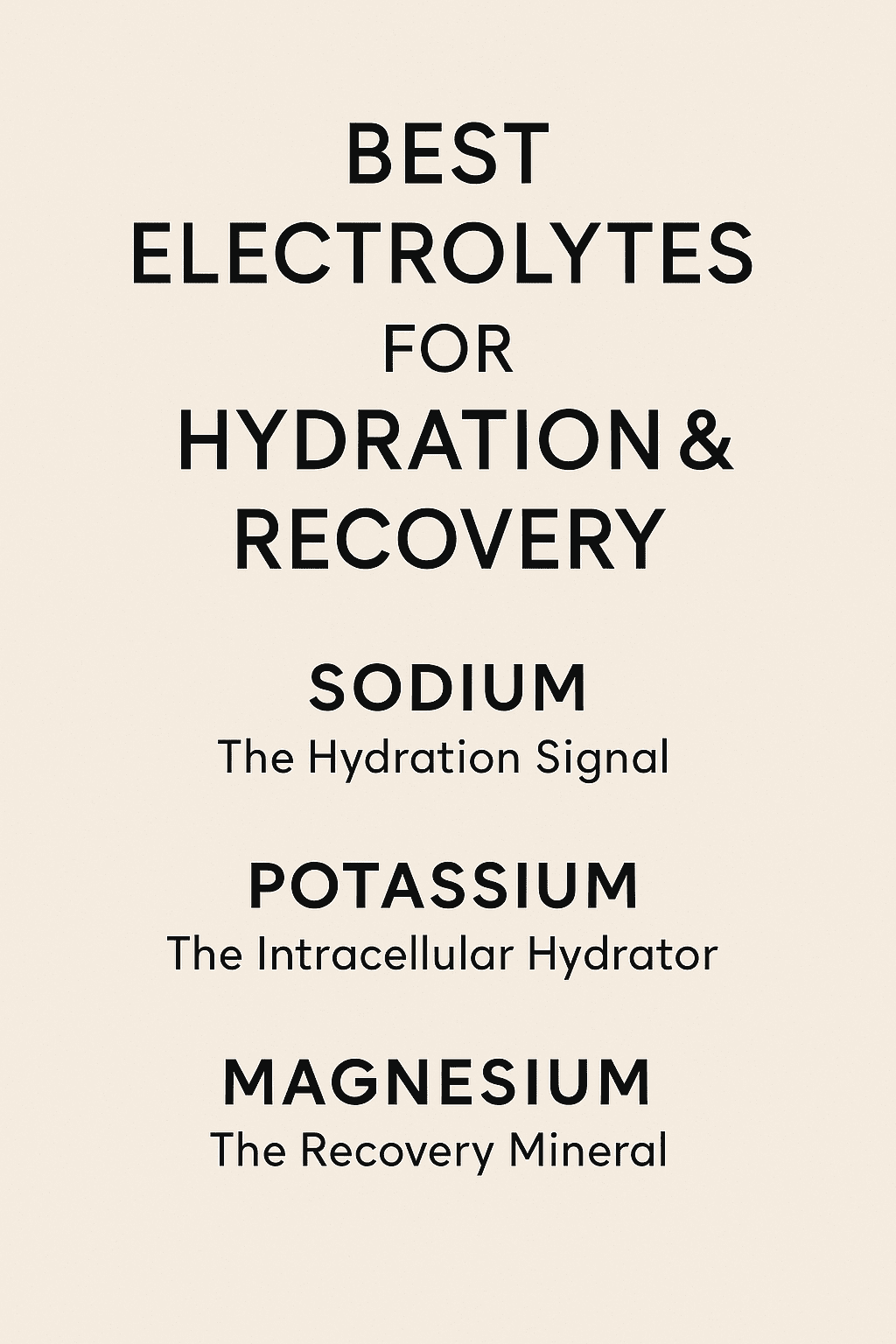
Direct answer: the “best electrolytes” depend on your pattern. Sodium is usually the first lever for hydration stability (heat, sweat, dizziness/headaches after lots of water). Potassium is the “inside-the-cell” lever for heavy legs and early fatigue. Magnesium is the recovery lever for tension, cramps, and sleep quality. A good mix matches the moment.
This page owns one intent: help you choose the right electrolyte strategy for hydration + recovery without guessing, stacking, or overcorrecting.
What are the best electrolytes for hydration?
For pure hydration stability, sodium is usually the #1 electrolyte—especially in heat, sweat, and “water doesn’t hydrate me” patterns. Potassium becomes more important when your issue is intracellular hydration (heavy legs, early fatigue). Magnesium matters more for recovery and relaxation.
Cannibalization guardrail: this page is choosing the best electrolyte strategy; for exact dosing targets see the sodium and potassium dosage guides, and for magnesium form choice see the magnesium decision guide.
- You sweat easily or train in heat
- You drink lots of water but stay thirsty or get headaches
- You cramp, feel heavy legs, or recover poorly after workouts
| Your intent | Most likely lever | Best next step (today) | Common mistake |
|---|---|---|---|
| Headaches/dizziness after water | Sodium + fluids | Salt a meal + drink a balanced mix in the same context | More water |
| Heavy legs/early fatigue | Potassium foods + sodium balance | Add potatoes/beans + use a balanced mix on sweat days | Relying on 99 mg pills to replace food |
| Night cramps/tension + poor sleep | Magnesium (recovery) | Trial magnesium at night and track cramps/sleep | Stacking multiple forms immediately |
| Heat cramps during cardio | Balance (sodium + potassium) | Use a balanced mix during activity + salted meal after | Assuming magnesium-only |
- Kidney disease or clinician-directed electrolyte restrictions
- Heart failure or severe hypertension (especially sodium-sensitive)
- Diuretics/BP meds that alter sodium/potassium handling
- Confusion, fainting/near-fainting, chest pain, seizures (urgent care)
- Vomiting/diarrhea/heat illness (higher stakes; medical guidance if significant)
Do electrolytes help with headaches, dizziness, and “water not hydrating”?
Often, yes—especially when the pattern is high water intake + heat/sweat + low salt. In those cases, sodium is the most likely missing lever because it helps hydration “stick” (volume stability). Potassium helps cellular hydration, but sodium is usually first for dizziness/headaches after water.
How much sodium and potassium do you need for hydration?
Needs vary with sweat rate, climate, diet, and water intake. The practical win is not perfect numbers—it’s matching electrolytes to demand spikes (heat, long workouts, low-carb phases) and tracking whether hydration becomes more stable.
- Heat + sweating (sodium loss rises quickly)
- Endurance/cardo (sodium + potassium matter)
- Low-carb phases (electrolyte loss often rises)
- High water intake (dilution risk if electrolytes are low)
Best electrolytes for workouts and sweating
For workouts—especially in heat—prioritize sodium + potassium. Magnesium is typically the recovery lever after (sleep, relaxation, night cramps). If your training is short and cool, food-first electrolytes may be enough.
Electrolyte supplements for hydration and recovery
If you want a simple “default,” a balanced sodium + potassium mix is often the highest-ROI hydration tool for sweat/heat days. Potassium-only support is more specific (heavy legs/early fatigue patterns) and works best with a food base.
Are electrolyte drinks safe every day?
For many healthy active people, electrolytes are most useful on higher-demand days (heat, sweat, long workouts). Daily use can make sense if you reliably run low (headache-prone, cramp-prone, low-carb, high water intake), but medical context matters—especially for kidney disease, heart failure, and sodium restriction.
How to tell if electrolytes are working
Electrolytes are working when hydration becomes more stable in the same context: fewer headaches/dizziness in heat, fewer cramps, steadier energy, and less “washed out” feeling after sweat. If nothing changes, the test likely wasn’t clean—or electrolytes aren’t the bottleneck.
- Changing water intake, caffeine, and training at the same time
- Using random salty snacks as “electrolytes”
- Assuming magnesium is the only cramp lever
- Judging after one day instead of repeating the trigger context
- Inputs held constant: water intake, caffeine timing, training schedule, meal timing
- Duration: 7–14 days (or 2–4 repeatable sweat/workout sessions)
- 3 metrics: dizziness/headache (yes/no), cramps count, energy stability (0–10)
- Stop conditions: confusion, fainting/near-fainting, chest pain, severe weakness, seizures
- Within 2–7 days: fewer heat/workout headaches and less dizziness in the same context
- Within 7–14 days: steadier energy and fewer “washed out” post-sweat crashes
- What not to expect: a strong sensation every time you drink a mix
- If nothing changes: reassess sleep, calories, illness, medication effects, and heat exposure
Selected Professional References
- NIH ODS: Potassium (Health Professional) — used for: intake targets, physiology, safety context
- NIH ODS: Magnesium (Health Professional) — used for: magnesium role and adverse effects context
- CDC: Sodium and health — used for: sodium overview and context framing
- CDC/NIOSH: Heat-related illness — used for: heat illness recognition and safety
Go Deeper (VerifiedSupps Guides)
Final Takeaway
“Best electrolytes” is a pattern match: sodium for hydration stability, potassium for cellular output, magnesium for recovery. Run a clean test in the same context (heat/workouts), track stability metrics, and keep the plan simple enough to learn from.