Zinc Deficiency Signs: A Calm, Clear Science-Based Guide
Zinc deficiency rarely looks like one dramatic symptom. It usually shows up as several smaller issues stacking—lower energy, slower immune recovery, skin changes, flatter mood, and “not bouncing back” the way you normally do. The key is patterns, not a single sign.
This guide helps you spot the most common signs, understand who’s at risk, and make a safe, practical plan (food first, supplements when it makes sense).
Quick Take
- Most common pattern: low energy + more frequent colds + slower recovery.
- Most “specific” clue: changes in taste/smell can be a zinc signal in some people.
- Supplement range most people use: 10–25 mg elemental zinc daily (short-term), not mega-doses.
- Big safety anchor: long-term high-dose zinc can lower copper status—more is not better.
If you feel severely unwell, have unexplained weight loss, persistent infections, or major skin/wound issues, treat that as a clinical evaluation—not a supplement test.
Parent Hub: Want a broader “symptoms → mineral” decoder that helps you compare zinc vs other common deficiencies?
Open: Mineral Deficiency Symptoms (VerifiedSupps)
Zinc deficiency “pattern check” (fast)
Not a diagnosis—just a clean way to notice when zinc is worth checking.
| If you notice… | Why zinc is relevant | Best next step | Don’t miss |
|---|---|---|---|
| More frequent colds or slow immune recovery | Zinc is central to immune signaling and barrier function | Check diet sources; consider testing if persistent | Sleep, stress, and iron status can also drive this |
| Low energy + “not bouncing back” after training | Zinc supports repair processes and metabolism | Improve intake; short trial can be reasonable | Under-eating, protein, and sleep often dominate recovery |
| Skin irritation, slow wound healing | Zinc supports skin integrity and repair | Focus on diet; consider clinician guidance if severe | Derm conditions can mimic deficiency |
| Changes in taste/smell | This can be a classic zinc-related clue for some people | Discuss with clinician if persistent or sudden | Infections and medications can also cause this |
If you see two or more rows that describe you, zinc is worth thinking about—especially if your diet is low in zinc-rich foods.
What are the signs of zinc deficiency?
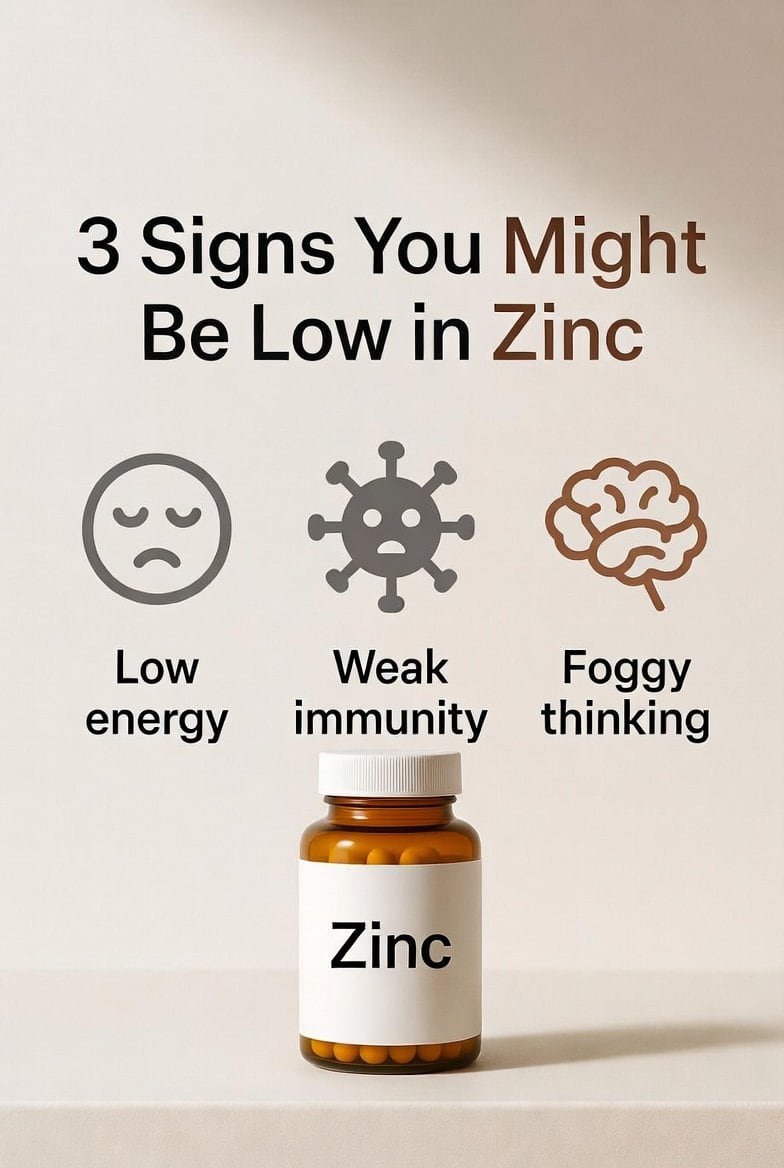
Zinc deficiency usually shows up as a cluster: lower energy, more frequent illness, flatter mood, skin irritation, slower healing, and changes in taste/smell. One symptom alone is rarely definitive. Patterns matter.
- Persistent low energy or “wired but tired” feeling
- More frequent colds or slower immune recovery
- Brain fog or concentration issues
- Dry/irritated skin, slow wound healing
- Changes in appetite, taste, or smell
- Poor workout recovery compared to your normal baseline
What does zinc do in the body?
Zinc supports hundreds of enzymatic reactions. Practically, it’s a “baseline mineral” for immune signaling, repair, and normal brain and skin function. When it’s low, a lot of small systems feel slightly worse at the same time.
- Immune defense and inflammatory signaling
- Energy metabolism and cellular repair
- Skin integrity and wound healing
- Protein and DNA synthesis
- Normal sensory function (taste/smell) in some contexts
Who is most at risk for zinc deficiency?
Zinc risk is often about diet patterns and absorption. You’re more likely to run low if your intake is consistently low, or if your gut doesn’t absorb minerals well.
- People who rarely eat red meat or shellfish
- Vegetarian/vegan diets without intentional mineral planning
- Digestive issues that affect absorption
- High stress or high training volume (higher turnover demands)
- Frequent alcohol use
If your diet has almost no zinc-dense foods, symptoms can quietly accumulate even if you “eat healthy.”
How do you test for zinc deficiency?
A clinician can order zinc testing, but no single lab perfectly captures long-term zinc status. Labs can still be useful—especially when paired with symptoms and diet context.
A practical approach
- If symptoms are mild: start by improving zinc-rich foods and see if the pattern improves.
- If symptoms are persistent or significant: consider labs and clinician guidance.
- If you supplement: track dose and duration so you don’t drift into “too much.”
How much zinc should you take if you think you’re low?
Many people use 10–25 mg elemental zinc daily as a conservative supplement range. Higher short-term doses may be used in specific situations, but chronic high dosing is where copper balance problems can show up.
Simple dosing guardrails
- Start low: if you’re new, start at the lower end and adjust.
- Take with food if zinc makes you nauseous.
- Don’t “forever” high-dose without a reason and monitoring.
If you already take zinc in a multivitamin, count that toward your total.
What is the best form of zinc supplement?
The “best” form is the one you tolerate and can take consistently. Many people choose zinc picolinate or zinc bisglycinate for everyday use because they’re straightforward and commonly well tolerated.
What to look for on the label
- Form clearly stated (picolinate, bisglycinate, citrate, etc.)
- Elemental zinc clearly stated (not just compound weight)
- Simple formula (avoid “kitchen sink” blends when you’re learning what works)
- Reasonable dose (10–25 mg is a common daily range)
Recommended zinc options (links preserved)
Premium · Nootropics Depot
Best for purity, testing focus, and consistency.
View Zinc at Nootropics DepotIf you choose to purchase through these links, it may support this site at no extra cost to you.
Why zinc supplementation isn’t helping (common mistakes)
Most “zinc didn’t help” outcomes come from one of three things: zinc wasn’t the bottleneck, the dose/timing was off, or you created side effects (like nausea) that made consistency impossible.
Fixes that usually work
- Nausea: take with food or reduce dose.
- Inconsistent use: daily use matters if you’re correcting low intake.
- Expecting instant energy: zinc is baseline support, not a stimulant.
- Ignoring copper balance: avoid chronic high dosing.
- Different deficiency: iron, vitamin D, sleep debt, or low calories/protein can look like “zinc issues.”
A simple 14-day “clean test”
- Use a conservative dose (10–25 mg elemental) with food.
- Track: immune resilience, skin/irritation, energy baseline, recovery.
- If nothing changes, treat that as useful information—look at other bottlenecks with a clinician if needed.
Selected Professional References
- NIH Office of Dietary Supplements: Zinc (Health Professional Fact Sheet)
- NIH Office of Dietary Supplements: Zinc (Consumer Fact Sheet)
- MedlinePlus: Zinc (Natural Medicines-style overview)
- PubMed: zinc deficiency clinical features (review search)
- PubMed: zinc supplementation and copper deficiency risk (search)
Go Deeper (VerifiedSupps Guides)
If you want the next step, these guides connect the dots without noise.
Zinc benefits
What zinc does, who benefits most, and how to dose responsibly.
Vitamin D benefits
Another common “quiet deficiency” that affects mood and energy.
How to choose supplements without guesswork
A calm decision system when symptoms overlap.
Magnesium complete guide
Another foundational mineral that often overlaps in symptoms.
Final Takeaway
Zinc deficiency usually isn’t one big symptom—it’s a stack of small ones. If your pattern fits, start with food intake first, then consider a short, conservative supplement range. Stay away from chronic mega-dosing, and treat persistent or severe symptoms as a reason to involve a clinician.
FAQ
What are the first signs of zinc deficiency?
Often a pattern: lower energy, more frequent illness, slower recovery, and subtle skin or mood changes rather than one dramatic symptom.
Can zinc deficiency cause changes in taste or smell?
It can for some people, but infections, medications, and other causes are also common. Persistent changes are worth discussing clinically.
How long does it take to correct low zinc?
It depends on the cause and severity. Many people judge trends over weeks, not days, especially for energy, recovery, and skin changes.
Should I take zinc with food?
If zinc causes nausea, yes—take it with food. Some people tolerate it fine without, but comfort and consistency matter most.
What happens if you take too much zinc?
High doses can cause nausea and, over time, can interfere with copper status. Avoid chronic mega-dosing unless clinician-guided.
What foods are high in zinc?
Shellfish (especially oysters), red meat, poultry, and some seeds/legumes are common sources. Diet patterns matter more than one “zinc food.”
Can zinc help immunity?
Zinc is important for immune function. If you’re low, improving intake can help normalize that baseline. It’s not a substitute for medical care.
Who should be cautious with zinc supplements?
People on multiple supplements (stacking doses), those with medical conditions, and anyone considering long-term higher dosing should consult a clinician to avoid imbalance risks.