By VerifiedSupps Editorial Team
Electrolytes at Night: Helpful or Sleep-Wrecking?
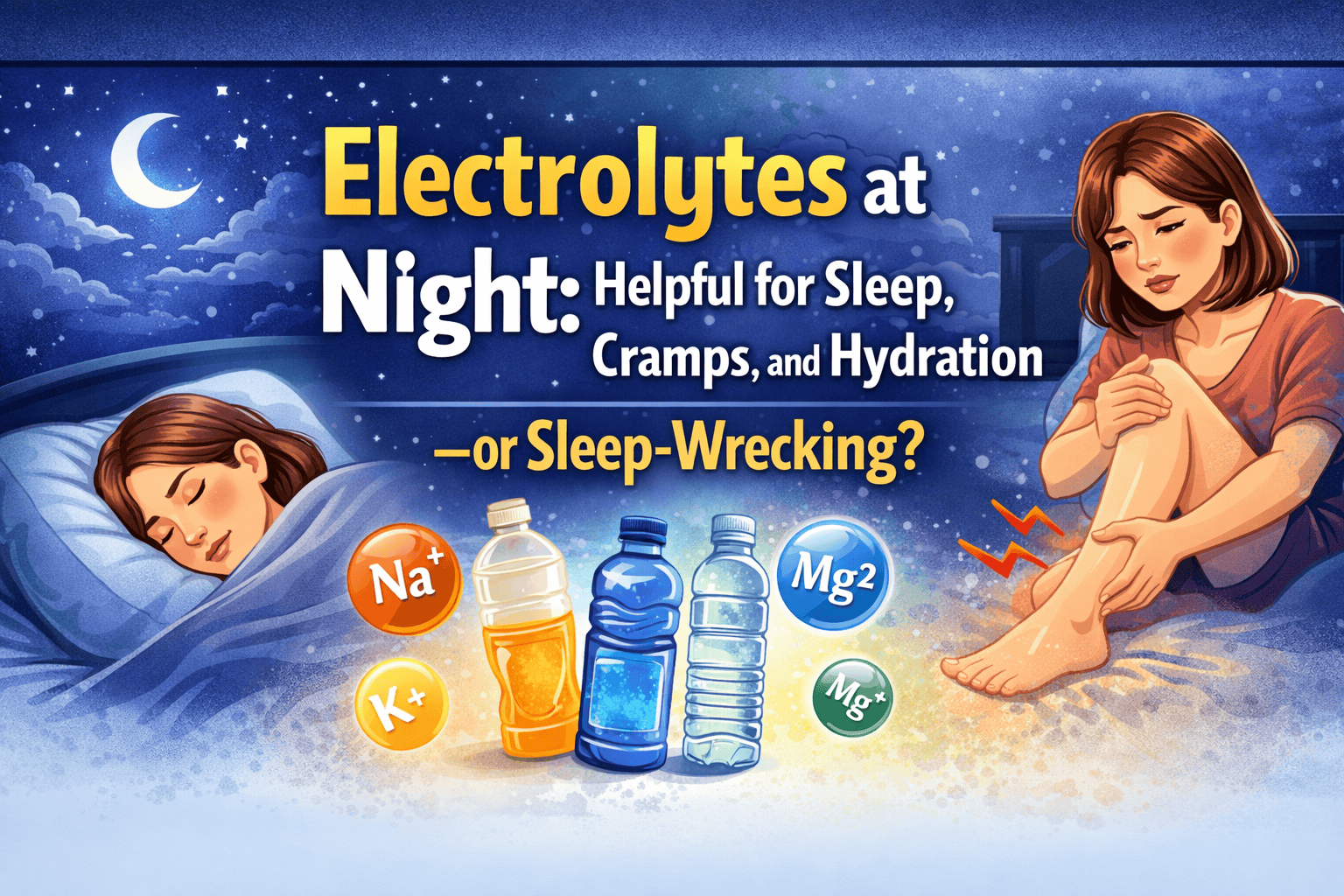
Electrolytes at night can be either helpful or sleep-wrecking depending on why you are taking them. If the real issue is late sweat loss, night cramps, waking up thirsty, or a washed-out feeling after a hot day or late workout, a smart nighttime electrolyte move can help. If the real issue is already waking to pee, a giant bottle before bed, a caffeinated mix, or a magnesium dose that upsets your stomach, it can absolutely make sleep worse.
The mistake is treating “electrolytes at night” like one thing. Magnesium, sodium, potassium, fluid volume, and timing do not behave the same way. The right move is usually smaller, earlier, and more targeted than people expect.
This page is focused on nighttime electrolyte use specifically: when it helps, when it interrupts sleep, and how to test the right approach without turning bedtime into a chemistry experiment.
Key terms: electrolytes at night, magnesium before bed, sodium at night, potassium at night, nocturia, night cramps, late-workout hydration
Quick Take
Electrolytes before bed make the most sense when you have a real nighttime hydration or cramp problem. They are most likely to wreck sleep when the bedtime drink is too large, the formula contains caffeine or sugar you did not think about, or the magnesium dose is high enough to cause GI issues.
TL;DR decision
If your nights are being disrupted by thirst, cramps, late sweat loss, or a dehydrated “washed out” feeling, electrolytes may help. If your main nighttime problem is already waking to pee, fluid timing usually matters more than the word electrolytes itself.
Evidence standard: human trials, dose ranges, guideline-level sources when available
Who this is for: people dealing with late-night cramps, waking thirsty, heat or sweat loss, late workouts, or uncertainty about bedtime electrolyte use
Who this is not for: anyone with kidney disease, heart failure, sodium restriction, potassium restrictions, or medication situations where electrolyte changes should be clinician-guided
Reviewed by: VerifiedSupps Editorial Team
Last reviewed: 2026-03-17
Parent Hub
Electrolytes Complete Guide
Use the full guide if you want the bigger sodium, potassium, and magnesium picture first. This page stays tightly focused on what changes when the timing is night.
Nighttime electrolyte fit check
Use this table to decide whether bedtime electrolytes are solving the right problem or creating a new one.
| If your night problem is… | Electrolytes at night | Best move | Avoid |
|---|---|---|---|
| Night cramps after a sweaty day or late workout | Often helpful | Small, targeted electrolyte plus dinner or earlier evening hydration | Huge bedtime bottle |
| Waking thirsty, headachy, or feeling dried out | Sometimes helpful | Moderate earlier-evening replacement, not last-minute chugging | Plain water overload |
| Already waking up to pee | Often sleep-wrecking if the volume is large | Shift fluids earlier and reduce evening volume | Big bedtime drink |
| Using a “sleep electrolyte” mix with caffeine, lots of sugar, or a harsh magnesium form | Often sleep-wrecking | Simplify the formula and test one variable at a time | Complex stacks you cannot troubleshoot |
Best next step (today): Decide whether your real problem is late sweat loss or late fluid volume, because those need opposite solutions.
Are electrolytes at night helpful or sleep-wrecking?
Both are possible. Electrolytes at night help when the bedtime problem is actually a hydration or mineral problem. They hurt when the bedtime problem is already too much fluid, too much bladder stimulation, or a formula that brings extra issues like caffeine, sugar, or GI upset.
Mechanism
- Electrolytes help regulate fluid balance and nerve-muscle function, which matters after sweat loss and heavy exertion.
- But large evening fluid volume can increase nighttime urination and disrupt sleep.
- Magnesium may help some sleep or cramp patterns, but the sleep evidence is mixed rather than definitive.
When do electrolytes before bed actually help?
The strongest case is when the night problem clearly follows late fluid and electrolyte loss: a late workout, sauna, hot day, heavy sweating, waking thirsty, night cramps, or feeling washed out despite drinking water. In those situations, a modest targeted nighttime electrolyte move can be better than more plain water.
Best-fit scenarios
Late sweat loss, headache plus thirst after heat, crampy calves or feet at night, or a low-carb phase where you feel flat and under-replaced.
Can electrolytes at night make you wake up to pee?
Yes, and in many cases the real issue is not the electrolyte itself. It is the timing and total fluid volume. Too much evening fluid can raise nighttime urination, and caffeine or alcohol later in the day can make that worse. If you already deal with nocturia, a big bedtime drink is often the sleep-wrecking move, whether it contains electrolytes or not.
Practical rule
If nighttime urination is already your main problem, shift more hydration earlier instead of trying to “fix” bedtime with a large electrolyte drink.
Is magnesium at night the best electrolyte for sleep and cramps?
Magnesium is probably the nighttime electrolyte people think about most, and it does make sense when the pattern is twitchiness, cramps, or a low-magnesium lifestyle context. But the sleep research is not clean enough to promise a strong effect for everyone, and the stronger the magnesium dose gets, the more side effects like diarrhea, nausea, and cramping become relevant.
Important caution
For adults, the tolerable upper intake level for supplemental magnesium is 350 mg/day outside of medically supervised use, and higher supplemental doses can cause diarrhea, nausea, and abdominal cramping.
Should you take sodium or potassium at night?
Sodium at night makes sense mainly when late sweat loss, headache, thirst, or low-carb-type under-replacement are part of the picture. Potassium is a different category. Potassium supplements are usually small-dose products, and higher potassium intake can be risky if you have kidney disease or take certain medications like ACE inhibitors, ARBs, or potassium-sparing diuretics.
Simple decision rule
Nighttime sodium is a context tool. Nighttime potassium is not something to get casual about if medication or kidney context is in play.
Why are electrolytes at night making sleep worse?
Most nighttime electrolyte problems are not complicated. The usual culprits are too much fluid too close to bed, hidden caffeine, large sugar loads, GI upset from magnesium, or using a nighttime drink for a problem that is not actually electrolyte-driven.
Common mistakes
- Drinking a huge volume right before sleep.
- Using a formula with caffeine or more sugar than you realized.
- Taking too much magnesium and getting GI side effects.
- Using bedtime electrolytes when the real issue is already nocturia, reflux, or a non-hydration sleep problem.
Clean test protocol
| Inputs | Use one simple formula with no caffeine, no big sugar load, and modest fluid volume only if the pattern really fits nighttime replacement. |
|---|---|
| Duration | Three to seven nights is usually enough to tell whether the smaller earlier approach helps or hurts. |
| 3 metrics | 1) bathroom trips, 2) cramps or thirst on waking, 3) next-morning “more refreshed or more disrupted?” |
| Stop conditions | Stop and reassess if symptoms worsen clearly, GI upset appears, or kidney, heart, or blood-pressure context makes the experiment questionable. |
How to tell it’s working
You are usually looking for fewer cramps, less waking thirsty, less washed-out feeling after heat or late workouts, and no increase in bathroom trips. If the bedtime “fix” creates more night waking, it is not a fix.
Red flags / seek care
Use clinician guidance instead of self-testing if you have kidney disease, heart failure, sodium restriction, potassium restriction, severe nocturia, or symptoms like confusion, severe weakness, or fainting.
Selected Professional References
These are the main external sources behind the fluid-timing, nocturia, magnesium, potassium, dehydration, and exercise-hydration context.
Nighttime liquid timing guidance
Helpful for the idea that evening fluid timing matters when nighttime bathroom trips are the problem.
Used for: nocturia and evening fluids
Urinating more at night
Helpful for why excess evening fluid, caffeine, and alcohol can disrupt sleep through nighttime urination.
Used for: sleep disruption via bathroom trips
Dehydration overview
Helpful for symptoms like thirst, dark urine, headache, muscle cramps, and dizziness.
Used for: under-replacement context
Magnesium fact sheet
Helpful for magnesium deficiency context, GI side effects, and the adult supplemental upper intake level.
Used for: magnesium at night context
Potassium consumer fact sheet
Helpful for potassium supplement limits and the kidney or medication caution that makes casual bedtime potassium a bad idea in some people.
Used for: potassium caution
Exercise and fluid replacement position stand
Helpful for the exercise-hydration logic that late workouts and sweat loss change fluid and electrolyte decisions.
Used for: late-workout hydration context
Go Deeper (VerifiedSupps Guides)
If the bedtime question turns into a bigger electrolyte question, these are the cleanest next steps.
Signs you need more electrolytes
Use this if the bedtime question is really part of a broader low-electrolyte pattern.
Best electrolytes for hydration and recovery
Use this if formula choice, not timing, is the bigger confusion.
Electrolytes for muscle cramps
Use this if your bedtime problem is mainly cramps rather than sleep disruption itself.
Magnesium for sleep handbook
Use this if nighttime electrolytes for you mostly means bedtime magnesium.
Final Takeaway
Electrolytes at night are helpful when the bedtime problem is really a late hydration or cramp problem. They are sleep-wrecking when the bedtime problem is already too much fluid, the wrong formula, or a bladder that is easily disturbed. Match the solution to the actual pattern, and bedtime usually gets simpler fast.
FAQ
Are electrolytes okay before bed?
They can be, but only when the bedtime problem is actually a hydration, cramp, or late-sweat-loss problem. If your main issue is already waking to pee, bedtime fluids can easily make sleep worse.
Can electrolytes help night cramps?
Sometimes. They make the most sense when late sweat loss, low intake, heat, or cramp-prone nights are part of the pattern.
Can electrolytes make you wake up to pee?
Yes. Large evening fluid volume can increase nighttime urination whether the drink contains electrolytes or not.
Is magnesium the best nighttime electrolyte?
It is often the first nighttime electrolyte people think about, especially for cramps or wind-down support, but the sleep evidence is mixed and higher doses can cause GI issues.
Should I take potassium before bed?
Not casually if you have kidney disease or use medications that can raise potassium. Potassium deserves more caution than many people assume.
Should I drink electrolytes after a late workout?
Often yes, but the smarter move is usually moderate replacement earlier in the evening rather than a huge bottle right before sleep.
Why do electrolytes make me feel wired at night?
Sometimes the formula contains caffeine or more sugar than you realized, or the drink volume is large enough to disturb sleep even if the minerals are fine.
Can dehydration wake you up at night?
Yes. Waking thirsty, headachy, or crampy after a hot day or late workout can point to under-replacement rather than just “bad sleep.”
VerifiedSupps Medical Disclaimer
This content is for educational purposes only and does not constitute medical advice. Electrolyte needs vary by activity, climate, medications, health conditions, and diet style. People with kidney disease, heart failure, sodium or potassium restrictions, or significant blood pressure issues should talk with a healthcare professional before intentionally changing electrolyte intake or using bedtime electrolyte formulas. Seek urgent medical care for confusion, fainting, chest pain, severe weakness, or symptoms that feel dangerous or escalate quickly.