Ubiquinol vs Ubiquinone: Which CoQ10 Form Is Actually Better?
For most people, ubiquinol is the safer “easy mode” pick because it’s the reduced (active) form and is often chosen when absorption may be harder (commonly with older age). Ubiquinone can still be a great option—especially if you’re younger, on a budget, and you take it correctly (with a fat-containing meal).
Quick Take: If you want the simplest answer that’s usually correct:
- Best for most people: ubiquinol (especially 35+ or on statins)
- Best budget option: ubiquinone (especially younger, healthy)
- Best absorption habit: take CoQ10 with a meal that contains fat
- Typical dose: 100–200 mg/day (higher ranges can be clinician-led)
Parent Hub: CoQ10 Benefits
What CoQ10 does, who tends to notice it most, and how to fit it into a clean baseline stack.
Open the CoQ10 benefits hub →
Is ubiquinol better than ubiquinone?
Often, yes—ubiquinol is commonly the better choice when you want the highest odds of absorption and ease-of-use (especially with older age). But ubiquinone can be a smart pick when you’re younger, healthy, and taking CoQ10 correctly.
| If you are… | Most practical pick | Why | Simple dose |
|---|---|---|---|
| 35+ or you want the “easy mode” option | Ubiquinol | Reduced (active) form; often chosen when conversion/absorption may be less efficient | 100–200 mg/day |
| Younger, healthy, budget-focused | Ubiquinone | Classic form; widely studied; cost-effective | 100–200 mg/day |
| On statins or clinician-directed heart support | Ubiquinol (often) | Common clinical discussion context; practical absorption preference | Often 200–300 mg/day in practice |
| If CoQ10 “does nothing” | Fix your intake before switching forms | Taking CoQ10 without fat is the most common failure mode | Take with a fat-containing meal for 2–6 weeks |
The hidden lever: form matters, but absorption habits matter more. If you take CoQ10 fasted, you’re under-testing it.
What is the difference between ubiquinol and ubiquinone?
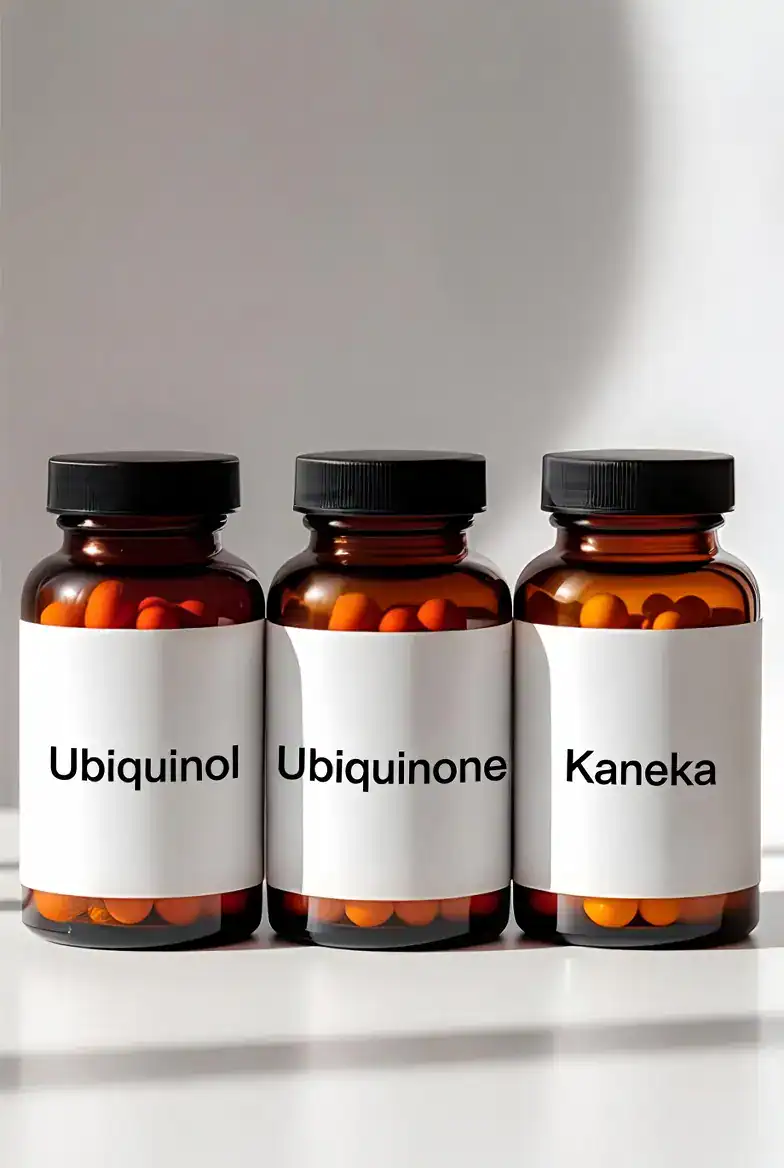
Ubiquinone is the oxidized (classic) form of CoQ10, and ubiquinol is the reduced form. Your body can convert between them, but the practical question is whether you want the form that is commonly positioned as “ready to use” (ubiquinol) versus the classic, often cheaper option (ubiquinone).
Constraint: most real-world outcomes hinge on (1) consistent dosing, (2) taking it with fat, and (3) giving it weeks—not days.
- Ubiquinone: classic form, widely studied, often cheaper.
- Ubiquinol: reduced form, often chosen when absorption and conversion are concerns.
Does ubiquinol absorb better than ubiquinone?
In many formulations and populations, ubiquinol is often discussed as having absorption advantages, especially in older adults. But even the “best-absorbed” form can underperform if it’s taken without fat.
Constraint: formulation matters. A high-quality, oil-based softgel taken with food can beat a dry capsule even if the “form” sounds better on paper.
Absorption checklist (simple)
- Always take with fat: eggs, olive oil, nuts, avocado, salmon.
- Softgel beats dry: oil-based softgels are a practical advantage.
- Consistency beats timing: daily use matters more than a perfect clock time.
Which CoQ10 form is best for statin users?
If you’re on statins, many people choose ubiquinol because it’s the reduced form and is commonly selected in the “make absorption easier” mindset. Dosing and clinical context matter here more than internet certainty.
Constraint: evidence for statin-associated muscle symptoms is mixed across trials, and CoQ10 is not a replacement for medical management. If your statin tolerance is a concern, coordinate with your clinician.
- Practical range often used: 200–300 mg/day in statin contexts.
- Most important habit: take it with a meal containing fat.
- Best evaluation method: track symptoms over weeks, not single days.
Why is Kaneka ubiquinol mentioned so often?
“Kaneka” is commonly referenced because it’s a well-known source of ubiquinol used by many premium brands. In practice, this usually signals a focus on consistent sourcing and standardization rather than a magical new ingredient.
Constraint: a strong source helps, but you still need the basics: adequate dose, oil-based delivery, and taking it with fat.
What “premium” usually means in CoQ10
- Ubiquinol form (often)
- Oil-based softgel delivery
- Clear, consistent dosing (100–200 mg or 200–300 mg depending on goal)
- Third-party testing or quality controls (when provided)
How much ubiquinol or ubiquinone should you take?
A simple, evidence-aligned starting range for either form is 100–200 mg/day. If your use-case is statin support or clinician-led cardiovascular support, 200–300 mg/day is commonly used in practice.
Constraint: dose is only half the story. CoQ10 is fat-soluble, so taking it with fat is the “absorption multiplier.”
- Best timing: with breakfast or lunch if it feels mildly energizing; otherwise any fat-containing meal.
- If stomach is sensitive: split the dose across two meals.
- If you’re not sure: start low, stay consistent, and reassess after a few weeks.
Why isn’t CoQ10 working for me?
Most “it did nothing” experiences are caused by absorption and expectations. CoQ10 often feels like a steadier baseline over weeks—not a stimulant kick.
- You took it without fat: fix this first. Take it with a fat-containing meal daily.
- You didn’t give it time: evaluate over 2–6 weeks, not 2–3 days.
- Your baseline is already strong: the better you already feel, the smaller the noticeable change tends to be.
- Dose mismatch: if you’re very low (like 30–50 mg), consider a cleaner test at 100–200 mg/day.
- Wrong target: if fatigue is driven by sleep debt, iron deficiency, thyroid issues, or under-eating, CoQ10 won’t override that.
- Too many changes at once: add CoQ10 alone so you can attribute effects.
Clean test: 200 mg/day with a fat-containing meal for 30 days, tracking energy steadiness weekly (not daily).
Selected Professional References
External links only. These are reputable starting points for CoQ10 forms, dosing context, and safety considerations.
- NIH NCCIH: Coenzyme Q10 — overview of uses studied, safety, and interactions.
- Mayo Clinic: Coenzyme Q10 — practical dosing and side-effect summary.
- StatPearls (NCBI Bookshelf): Coenzyme Q10 — clinical overview including interactions.
- PubMed search: ubiquinol vs ubiquinone bioavailability — human studies comparing forms and absorption.
- Q-SYMBIO trial (PubMed) — CoQ10 studied as an adjunct in chronic heart failure context.
- PubMed search: CoQ10 and statin muscle symptoms meta-analysis — mixed results; useful for evidence review.
Go Deeper (VerifiedSupps Guides)
If you want the full ecosystem around CoQ10 (dosing, buying, and baseline stacking), these are the best next reads.
CoQ10 Dosage Guide
Energy vs heart goals, timing, and the most common dosing mistakes.
Best CoQ10 Supplement Guide
What to buy, what to ignore, and how to spot quality signals fast.
NMN vs NR
A calm comparison if you’re building a longevity-style stack.
Omega-3: Is It Worth Taking?
A foundational companion for cardiovascular and inflammation goals.
Final Takeaway
If you want the highest-probability pick, ubiquinol is usually the simplest choice—especially as age increases or when absorption is a priority. If you’re younger and budget-focused, ubiquinone can still be a smart, effective option.
The biggest performance lever is not the label—it’s taking CoQ10 with a fat-containing meal and giving it enough time to show up as a steadier baseline.
If you’re on statins or blood thinners, treat CoQ10 as a clinician-informed tool, not a guess.
Frequently Asked Questions
Is ubiquinol worth the extra cost?
Often, yes if you’re older, on statins, or you want the “highest odds” absorption choice. If you’re younger and consistent with taking CoQ10 with fat, ubiquinone can be a solid value.
Can I switch from ubiquinone to ubiquinol?
Yes. Many people start with ubiquinone and switch if they want a simpler absorption strategy or if they’re not noticing anything. Keep the rest of your routine stable so you can attribute changes.
Should CoQ10 be taken with food?
Yes. CoQ10 is fat-soluble, so taking it with a fat-containing meal is one of the most important steps for absorption.
How long does CoQ10 take to work?
Many people evaluate it over 2–6 weeks of consistent daily use. It often feels like steadier baseline energy rather than an immediate effect.
What’s the best CoQ10 dose for most people?
A common practical range is 100–200 mg/day with food. Higher dosing may be used in some clinical contexts, but it’s best treated as a clinician-guided decision.
Can CoQ10 interact with blood thinners?
Potential interactions are commonly noted in clinical references. If you take anticoagulants or antiplatelet medications, discuss CoQ10 with your clinician before starting.
Does CoQ10 lower blood pressure?
Some studies explore blood pressure effects, and individual response varies. If you have low blood pressure or take BP medications, use clinician guidance and monitor how you feel.
Is 400 mg of CoQ10 too much?
Not automatically—higher doses appear in some clinical studies. But for self-supplementing, it’s usually smarter to confirm absorption and consistency first before jumping to high dosing.