Too Much Sodium vs Too Little: How It Actually Feels (Symptoms + What to Do)
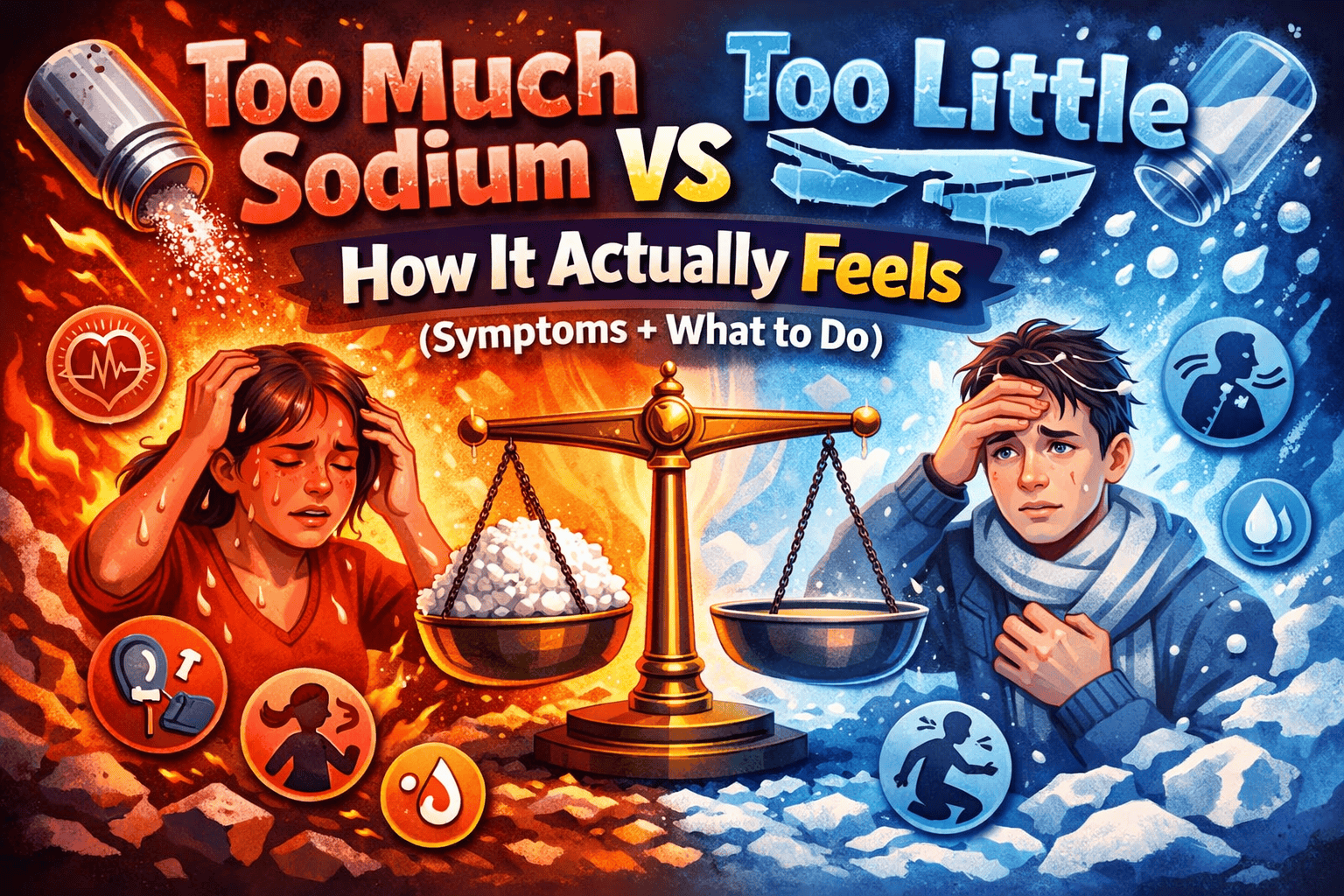
Too little sodium usually feels like “water isn’t hydrating”—headache, dizziness, nausea, weakness—especially after sweat + lots of plain water. Too much sodium (dietary) usually feels like “puffy + thirsty”—dry mouth, water retention, higher blood pressure in salt-sensitive people—especially after processed meals. The win is matching the pattern so you pull the right lever.
Key terms: sodium, salt, hyponatremia, hypernatremia, dehydration, electrolytes, salt sensitivity. Scope note: this guide is about “how it feels” and what to do today; it’s not a long-term hypertension or kidney-disease protocol.
- “Low sodium” feel: headache/dizzy/weak after sweating + drinking lots of water.
- “High sodium intake” feel: thirst + puffiness + “tight rings” after salty/processed meals.
- Best lever for low: sodium + fluids together (not more plain water).
- Best lever for high: reduce processed sodium + prioritize potassium-rich whole foods.
- Headache + dizziness after a long sweaty workout.
- You drink a lot of water but still feel “off.”
- You feel puffy and thirsty after salty foods.
- Your blood pressure trends up when stress + processed foods stack.
Sodium symptom decoder (what it feels like + what to do today)
| What you feel | Most likely pattern | Why | What to do today | Best next step (today) |
|---|---|---|---|---|
| Headache + dizzy after sweat + lots of water | Too little sodium relative to fluid | You replaced water faster than sodium | Use sodium + fluid together (electrolyte drink + food) | Stop chugging plain water and add sodium |
| Thirst + “tight rings” + puffiness after salty meal | High sodium intake (dietary) | Sodium pulls water; processed foods load fast | Hydrate normally + choose low-processed meals next | Make the next meal potassium-rich |
| Cramps + fatigue during heat/endurance | Sweat losses (sodium first) | Sweat losses can outpace replacement | Electrolytes during + salty food after | Use an electrolyte drink during long sessions |
| Blood pressure trending up + high processed food weeks | Chronic high sodium intake (salt-sensitive) | Processed sodium can push BP in many people | Reduce processed sodium; prioritize whole foods | Plan 3 low-processed meals |
What does low sodium feel like?
Most people don’t “feel low sodium” from diet alone. They feel low sodium relative to fluid and sweat losses—often after heat, endurance, sauna, diuretics, or drinking lots of plain water.
- Sodium helps hold fluid in the right compartments (blood ↔ tissues).
- Too much water without sodium can dilute sodium and worsen symptoms.
- The brain is sensitive to rapid sodium shifts—severe lows can become dangerous.
- Common “low sodium” feel: headache, nausea, dizziness, weakness, low energy, “water doesn’t help.”
- Workout pattern: cramps + fatigue + “heavy legs” during heat/endurance.
- Key clue: symptoms improve with sodium + fluid (not just water).
What does too much sodium feel like?
Most “too much sodium” feelings are from high sodium intake (usually processed/restaurant foods), not “high sodium in the blood.” The common experience is fluid shift + thirst.
- Common feel: thirst, dry mouth, puffiness, tighter rings, heavier face/eyes in the morning.
- Blood pressure: some people are salt-sensitive and see higher readings after salty weeks.
- Important nuance: true hypernatremia is usually dehydration/medical context—not “you ate salt.” If you feel confused or severely unwell, treat it as medical.
How can you tell if you need more sodium or less sodium?
You don’t need perfect certainty. You need a clean pattern test where you change one lever and track a few signals.
- Inputs: keep meals + caffeine stable; change only sodium strategy.
- Duration: 7 days (then decide), 14 days if you’re unsure.
- Track 3 metrics: morning weight (water retention), thirst (1–10), and a daily symptom score (headache/dizzy/“puffy”).
- Stop conditions: confusion, fainting, chest pain, severe weakness, or rapidly worsening symptoms → seek care.
Label-reading micro-rule: many labels list salt, not sodium. Sodium is ~40% of salt by weight (so “1 g salt” is ~400 mg sodium).
How do you fix low sodium safely?
If the pattern is “sweat + lots of water + headache/dizzy,” the fix is usually simple: sodium + fluid together, plus food.
- Pause the plain-water spiral. Don’t chug more water if you feel worse after water.
- Add sodium + fluid (electrolyte drink, broth, or a salty meal + water).
- Rest and reassess within 30–90 minutes.
- Keep the next session smarter: electrolytes during long/hot workouts, not only after.
How do you reduce sodium without feeling weak?
Most people don’t need “zero sodium.” They need less processed sodium—while still supporting electrolytes during sweat and training.
- Change the source: reduce processed/restaurant meals first (biggest sodium load).
- Replace, don’t just remove: add potassium-rich foods (beans, potatoes, greens, yogurt, fruit).
- Don’t “low sodium” a sweat week: endurance/heat often increases sodium needs.
- Use data: track BP + morning puffiness for 2 weeks, not one meal.
How much sodium do you need per day?
There isn’t one perfect number for everyone. Needs vary with sweat rate, diet, and medical context. But most major guidelines aim to reduce chronically high sodium intake because it raises blood pressure risk in many people.
When should you see a doctor for sodium symptoms?
Sodium symptoms overlap with dehydration, low blood pressure, infection, medication effects, and blood sugar swings. If you’re unsure—or if symptoms are intense—get evaluated.
- Confusion, fainting, seizures, severe weakness, or severe vomiting/diarrhea.
- Chest pain, shortness of breath, or new/worsening palpitations.
- Known kidney disease, heart failure, liver disease, or you’re on diuretics/SSRIs/other meds affecting sodium.
- Symptoms that persist or worsen despite sensible hydration/electrolytes.
Go Deeper (VerifiedSupps Guides)
Selected Professional References
Final Takeaway
If symptoms follow sweat + lots of water, think low sodium relative to fluid and fix it with sodium + fluids together. If symptoms follow processed meals + puffiness/thirst or BP creep, think high sodium intake and fix it by reducing processed sodium and prioritizing potassium-rich whole foods. Don’t guess in red-flag situations—get evaluated.