By VerifiedSupps Editorial Team
Taurine Benefits: The Complete Science-Backed Guide
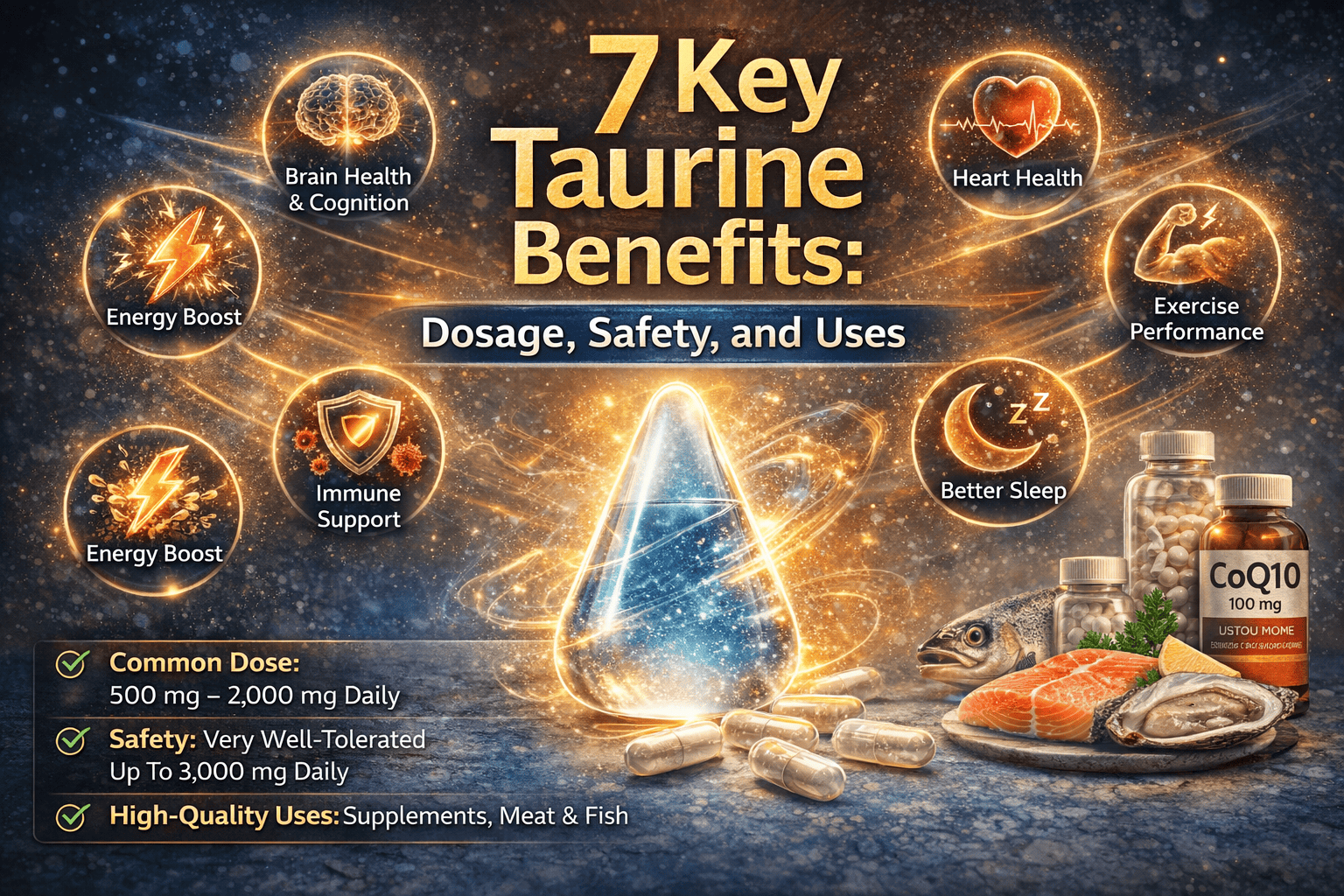
Taurine is one of those supplements that sounds bigger online than it usually feels in real life. The best human evidence is not “it changes everything.” It is more specific: taurine may offer a modest performance edge in some exercise settings, and it has genuinely promising data for blood pressure, vascular function, and broader cardiometabolic markers.
Where people usually get ahead of the evidence is sleep, focus, energy-drink logic, and anti-aging hype. Taurine is not caffeine, and it is not currently a proven human longevity supplement. A practical real-world range is often 1–3 g/day, with the strongest long-term safety support up to 3 g/day in healthy adults.
This page focuses on taurine as a standalone supplement: what it may help with, where the evidence is strongest, how to dose it, and when to keep expectations modest. It is not an energy-drink guide, and it is not a replacement for blood pressure, glucose, or cardiovascular treatment.
Key terms: taurine, amino sulfonic acid, exercise performance, blood pressure, cardiometabolic health, sleep, energy drinks, taurine dosage
Quick Take
Taurine looks most useful when your goal is exercise support or cardiometabolic support, not when you want a dramatic stimulant effect. The strongest sleep, focus, and anti-aging claims are still ahead of the human evidence, so taurine makes the most sense as a calm, specific tool rather than a miracle ingredient.
TL;DR decision
Taurine is worth considering if your main target is performance/recovery or blood-pressure/metabolic support, and 1–3 g/day is the practical range most people should think in. It is a weaker bet if your main hope is a reliable nootropic, sleep aid, or proven anti-aging shortcut.
Evidence standard: human trials, dose ranges, guideline-level sources when available
Who this is for: adults who want a realistic taurine overview before adding it for performance, recovery, blood pressure, or metabolic support
Who this is not for: anyone treating taurine like a replacement for cardiovascular care, glucose management, or an excuse to use high-caffeine energy drinks as a “taurine test”
Reviewed by: VerifiedSupps Editorial Team
Last reviewed: March 30, 2026
Parent Hub
How to Choose Supplements Without Guesswork
Use this if taurine sounds interesting but you want a calmer framework for deciding whether any supplement actually belongs in your plan.
Taurine benefits decoder
This is the fastest way to match taurine to the goal you actually care about instead of buying into a generic “good for everything” story.
| If your main goal is… | How strong the human evidence looks | Practical dose range | Best expectation |
|---|---|---|---|
| Exercise performance or recovery | Promising but mixed-positive | Usually 1–3 g, sometimes up to 6 g in research | A modest edge, not a dramatic stimulant feel |
| Blood pressure or vascular support | Genuinely promising | Often 1.5–3 g/day | Small but meaningful trend improvements |
| Glucose, triglycerides, or broader metabolic support | Promising and improving | Often 1.5–3 g/day for 8+ weeks | Think trend support, not magic |
| Sleep, calm, focus, or mood | Limited and inconsistent | Usually 1–3 g if testing | Not a first-line choice if this is your main problem |
| Longevity or anti-aging | Not proven in humans yet | Do not buy based on this alone | Interesting idea, not settled human evidence |
Best next step (today): Pick one actual goal before you buy taurine. It is much easier to judge “did this help?” when the target is specific.
What does taurine do and what are the biggest real benefits?
Taurine is a sulfur-containing amino-sulfonic acid with several physiologic roles, but the biggest practical takeaway is simpler: the strongest human benefit signals are in exercise/endurance support and cardiometabolic support. The weakest claims are the “it boosts everything” claims.
Mechanism
- Taurine helps with cell volume regulation, which is one reason it shows up in exercise, hydration, and tissue-protection discussions.
- It contributes to bile salt formation and interacts with calcium handling, membrane stability, and oxidative stress pathways.
- Those mechanisms sound broad, but the human outcomes are still more convincing in some lanes than others. Mechanism is not the same thing as guaranteed real-world benefit.
So where does taurine actually look most useful? If you want a modest performance or recovery edge, it is worth a look. If you care about blood pressure, vascular function, triglycerides, glucose, or insulin sensitivity, taurine looks more interesting than many people realize. If you want a reliable stimulant effect, a proven nootropic effect, or a clear anti-aging shortcut, the evidence is still not there.
What would change my recommendation
If your main problem is serious anxiety, insomnia, ADHD-like symptoms, major depression, or fatigue, taurine would not be my first-choice supplement. If your main problem is performance, recovery, blood pressure drift, or metabolic-support strategy, taurine becomes much more reasonable.
Is taurine good for exercise performance and recovery?
Yes, potentially—but the right expectation is modest and context-dependent, not “pre-workout rocket fuel.” Human meta-analysis data support a small endurance benefit, and broader sports reviews suggest taurine may help time-to-exhaustion, some anaerobic outputs, and certain recovery markers in some settings.
The cleanest exercise evidence is not that taurine turns you into a different athlete. It is that doses in the 1–6 g range, taken acutely or used over short blocks, may improve endurance performance a bit. A 2021 sports review also noted possible benefits for peak power, muscle soreness, recovery, and biomarkers like creatine kinase or lactate, but the literature is still mixed enough that taurine should be framed as a useful tool, not a guaranteed effect.
In practice, taurine makes more sense if you train regularly and want to sharpen the margins. It makes less sense if you are expecting the kind of obvious sensation you get from caffeine. Taurine is better understood as a “quiet performance support” ingredient than a “feel it in 20 minutes” ingredient.
Best fit: endurance work, repeated efforts, or recovery-minded athletes who want a low-drama add-on and are willing to judge results over multiple sessions.
Can taurine help blood pressure, heart health, and metabolic markers?
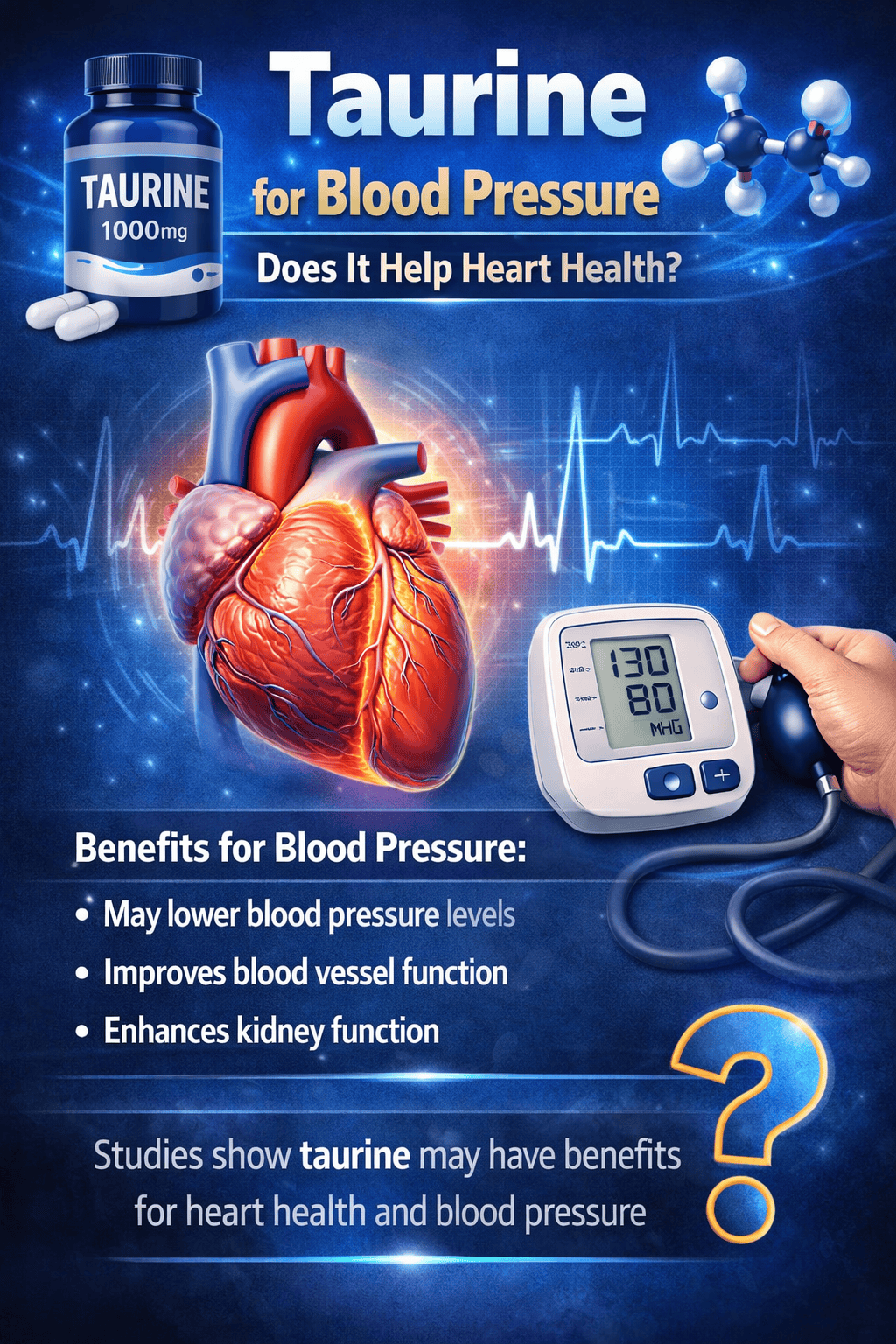
This is probably taurine’s most underrated lane. The human evidence here is more interesting than the average supplement shopper realizes: taurine has shown small but meaningful improvements in blood pressure, vascular function, and a range of metabolic markers in randomized trials and meta-analyses.
One of the cleaner individual trials gave 1.6 g/day for 12 weeks to people with prehypertension and found significant reductions in clinic and ambulatory blood pressure along with improved vascular function. More recent meta-analyses go broader and suggest taurine can reduce systolic and diastolic blood pressure, fasting glucose, insulin resistance, triglycerides, and some inflammatory or oxidative-stress markers, with the 2025 review suggesting 1.5–3 g/day may be the sweet spot for cardiometabolic outcomes.
That does not mean taurine replaces antihypertensive medication, statin decisions, glucose management, or clinician-led cardiovascular care. It means taurine may deserve more respect as a supportive nutrition tool in people who are already thinking seriously about cardiometabolic health.
Best fit: people with borderline or mild-risk cardiometabolic concerns who want a clinician-compatible add-on, not a substitute for standard care.
Does taurine help sleep, calm, focus, or energy?
This is where the internet usually overstates taurine. Human evidence for sleep, calm, focus, or cognition is still limited and inconsistent, so taurine should not be presented as a reliable nootropic or sleep supplement based on current standalone human data.
A 2025 meta-analysis of randomized controlled trials did not find sufficient evidence that taurine supplementation meaningfully improves cognitive function. That matters because a lot of the “taurine sharpens focus” conversation comes from energy-drink logic, animal work, or mixed-ingredient products. When taurine is tested more cleanly, the effect on cognition or mood looks much less certain.
Energy drinks are the reason people get confused here. Taurine is often paired with caffeine, and newer network meta-analysis work suggests the combination of caffeine plus taurine may help anaerobic capacity and reaction time more than either alone. That is interesting, but it does not prove taurine by itself is a stimulant. It mostly tells you that co-formulation changes the picture.
Practical rule: if your real goal is better sleep, calmer evenings, sharper focus, or lower anxiety, taurine is a maybe—not a first-line answer.
Is taurine anti-aging or is that still speculation?
Right now, taurine is interesting for aging—not proven. The longevity buzz came from a major 2023 animal paper, not from a settled body of human outcome trials.
That distinction matters. Animal data can be useful for generating hypotheses, but it does not automatically translate into human lifespan or healthspan results. The good news is that this question is being taken seriously enough that a human clinical trial is underway to study taurine intake and biological aging in older adults.
Practical rule: do not buy taurine primarily for anti-aging claims yet. If you end up using taurine, let it be because its better-supported lanes match your real goal—not because longevity headlines got ahead of human proof.
How much taurine should you take per day?
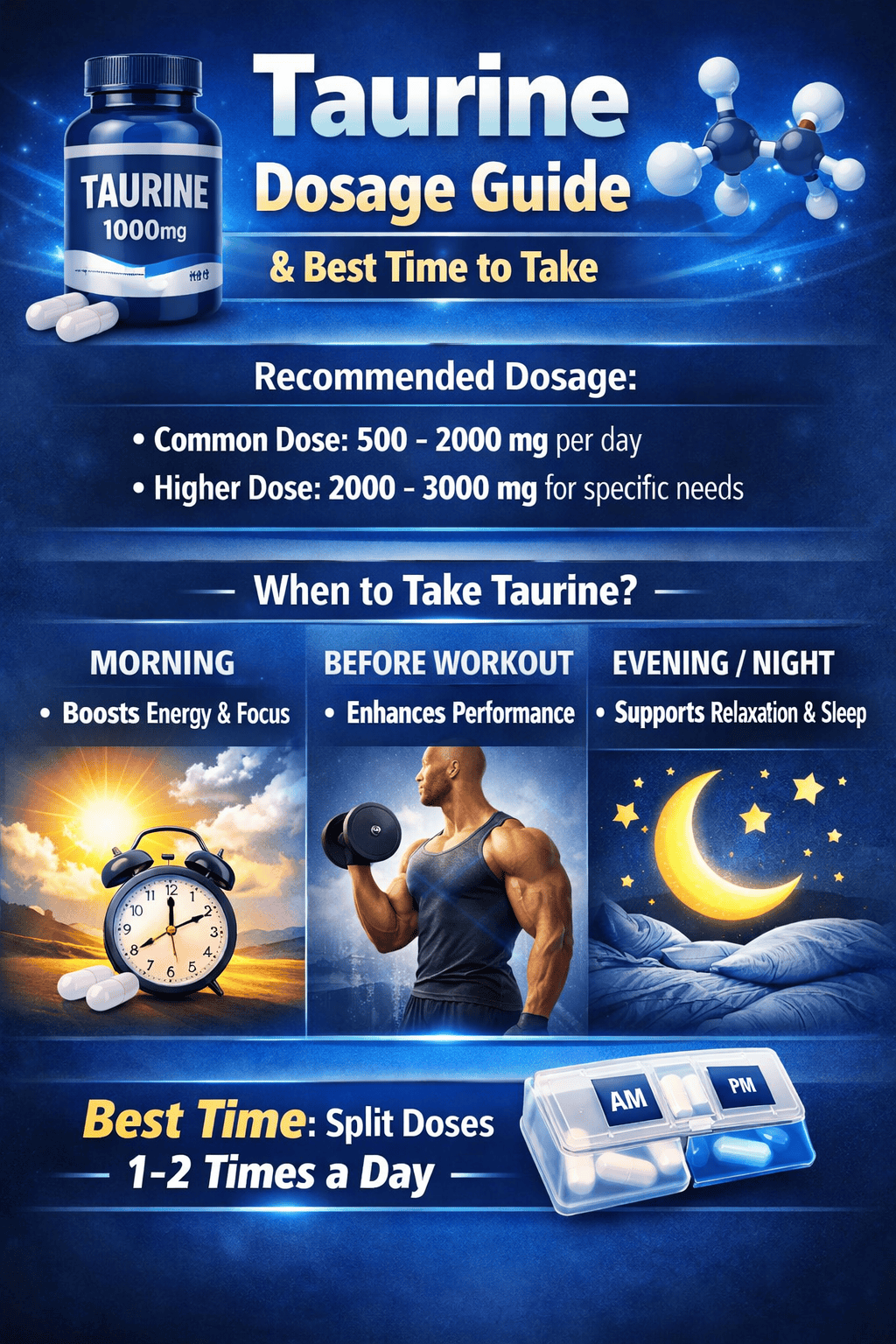
For most people, the practical taurine range is 1–3 g/day. That range fits most of the worthwhile supplement use-cases without jumping straight to the higher end of the research literature.
If your goal is exercise support, studies and reviews often use 1–3 g acutely before exercise, with some research going up to 6 g. If your goal is blood pressure or broader cardiometabolic support, the more useful range looks like 1.5–3 g/day, often over several weeks. If you are only curious and want the lowest-friction way to test taurine, starting at 500 mg to 1 g/day is reasonable.
Taurine does not appear to require a complicated timing strategy for most people. Pre-workout timing makes sense if performance is your goal. Otherwise, once or twice daily is usually more about tolerance and routine than magic timing.
Simple dose logic: start lower than the impressive internet anecdotes, match the dose to the goal, and give the right timeline before judging.
Is taurine safe every day and who should be cautious?
For healthy adults, taurine appears to be generally well tolerated, especially in the usual supplement range. The strongest conservative long-term safety benchmark is an observed safe level of up to 3 g/day in healthy adults, while many shorter trials have used doses above that without major problems.
That does not mean every context is equally simple. Because taurine can nudge blood pressure and glucose-related markers in a favorable direction, people already using medications for those same systems should be more deliberate. That is not the same as saying taurine is dangerous. It just means you should not ignore the fact that your supplement goal overlaps with your medication goal.
If side effects happen, they are usually mild and often gastrointestinal. If your taurine “experience” came from an energy drink, remember you did not test taurine alone—you tested taurine plus caffeine and whatever else the product included.
Best caution groups: people with low blood pressure, people on blood-pressure or glucose-lowering medication, anyone using very high caffeine alongside taurine, and anyone who wants to jump into higher dosing without a clear reason.
Why isn’t taurine working for me?
Usually because the goal was vague, the dose did not match the goal, or the expected effect was too dramatic. Taurine is often best when the question is specific: “Does this slightly improve my recovery?” or “Does this help my blood pressure trend?” It is much worse when the question is “Do I feel super different?”
Common mistakes
- Testing taurine for a goal with weak standalone evidence, like big cognitive or sleep expectations
- Using a dose that is too low for the goal or changing the dose too quickly to learn anything
- Judging taurine through an energy drink instead of a standalone taurine supplement
- Expecting a stimulant sensation instead of a subtle trend over time
Clean test protocol
| Inputs | Use taurine alone, not an energy drink. Pick one goal only. Start at 1 g/day, or 1–2 g pre-workout if performance is the reason you are testing it. |
|---|---|
| Duration | For performance, judge over several sessions. For blood pressure or metabolic support, think in 4–12 week blocks, not a few days. |
| 3 metrics | Track one performance marker, one recovery or daily-feel marker, and one objective marker if relevant, such as home blood pressure, resting trend, or clinician-guided lab follow-up. |
| Stop conditions | Stop if you develop persistent GI symptoms, dizziness you did not have before, symptoms of overly lowered BP or glucose, or if the supplement no longer makes sense for the goal you are actually trying to solve. |
How to tell it’s working
The signal is often subtle. For exercise, think slightly better repeated efforts, recovery, or endurance feel. For cardiometabolic use, think trend shifts over time, not a big obvious sensation. If the only thing you are tracking is “Do I feel a buzz?” taurine will probably disappoint you.
Red flags / seek care
Get clinician input before continuing if you are trying taurine alongside blood-pressure or glucose-lowering medication and feel off, lightheaded, or unusually weak. Seek urgent care for significant allergic symptoms, chest pain, severe dizziness, or anything that clearly does not fit a routine supplement issue.
Selected Professional References
These are the main sources anchoring the benefit claims, dose ranges, and safety boundaries used in this guide.
Effects of Oral Taurine Supplementation on Cardiometabolic Risk Factors
Broad 2025 meta-analysis showing taurine’s most convincing human support may be in blood pressure, glucose control, insulin resistance, lipids, and inflammatory markers.
Used for: cardiometabolic benefits, dose-response clues, realistic benefit framing
Taurine Supplementation Lowers Blood Pressure and Improves Vascular Function in Prehypertension
One of the strongest individual human trials showing taurine can improve blood pressure and vascular function in a meaningful clinical context.
Used for: blood pressure section, practical dose context, vascular-support credibility
The Effects of an Oral Taurine Dose and Supplementation Period on Endurance Exercise Performance
A clean meta-analysis supporting taurine’s modest but real potential for endurance performance in humans.
Used for: exercise-performance claims, acute dose framing, “modest not magical” positioning
Taurine in Sports and Exercise
Useful broader review covering recovery, power, soreness, timing, and why taurine’s ergogenic evidence is promising but still mixed.
Used for: recovery discussion, mixed-evidence guardrails, athlete-use context
Effects of Taurine Supplementation on Cognitive Function
Important counterweight to overhyped taurine-nootropic claims: current randomized evidence does not support confident cognitive enhancement claims.
Used for: cognition, focus, and mood caution language
Risk Assessment for the Amino Acids Taurine, L-Glutamine and L-Arginine
Still one of the key sources for taurine’s conservative long-term safety framing in healthy adults.
Used for: daily safety range, “up to 3 g/day” confidence point
Go Deeper (VerifiedSupps Guides)
These are the best next reads if taurine points you toward performance, recovery, stress support, or sleep rather than a one-supplement answer.
Best Pre-Workout Ingredients Explained
Best next step if taurine mainly interests you as a performance ingredient and you want to compare it with the rest of the pre-workout field.
Muscle Growth and Recovery Stack
Open this if taurine is really part of a bigger recovery and training-support strategy, not a standalone answer.
Best Supplements for Stress Relief
Useful if your real question is stress support or calm and you want stronger first-line options than taurine alone.
The Complete Sleep Stack
Go here if you came in hoping taurine would solve sleep and you want the broader evidence-backed sleep-support picture.
Final Takeaway
Taurine is a good example of a supplement that looks better when the goal is specific. It is a respectable option for exercise support and cardiometabolic support, a weaker option for sleep, focus, and mood, and still an unproven option for human longevity. If you use it, keep the dose grounded, judge it against the right timeline, and do not confuse taurine with the much louder ingredients often packaged around it.
FAQ
What does taurine do in the body?
Taurine helps with cell-volume regulation, bile salt formation, membrane stability, calcium handling, and several stress-response pathways. In supplements, its more convincing benefit signals are in exercise and cardiometabolic support.
Is taurine a stimulant?
No. Taurine is not a stimulant like caffeine. If a taurine product feels energizing, caffeine or other co-ingredients are often doing much of that work.
How much taurine should I take per day?
For most people, 1 to 3 grams per day is the practical range. Exercise studies sometimes use higher doses, but 1 to 3 grams covers most sensible supplement use.
Does taurine help exercise performance?
It may provide a modest benefit, especially for endurance-type work and possibly some recovery metrics. It is not usually a dramatic “feel it instantly” supplement.
Does taurine lower blood pressure?
It may modestly help. Human trials and meta-analyses suggest taurine can improve blood pressure and vascular function, but it is not a replacement for standard treatment.
Can taurine help sleep or anxiety?
Possibly for some people, but the current human evidence is limited and inconsistent. Taurine is not one of the strongest first-line supplement choices for sleep or anxiety.
Is taurine good for heart health?
It looks promising for blood pressure, vascular function, triglycerides, glucose control, and broader cardiometabolic support. That is one of taurine’s strongest evidence-backed areas.
Is taurine safe every day?
For healthy adults, taurine appears generally well tolerated. A conservative observed safe level with the strongest long-term support is up to 3 grams per day.
Can you take taurine with caffeine?
Yes. Some data suggest the combination may help certain reaction-time or anaerobic tasks more than either alone, but that does not mean taurine alone is a stimulant.
Who should be more cautious with taurine?
People with low blood pressure, people taking blood-pressure or glucose-lowering medication, and anyone using taurine mainly through high-caffeine energy drinks should be more deliberate and consider clinician input.
VerifiedSupps Medical Disclaimer
This content is for educational purposes only and is not medical advice. Taurine is not a substitute for treatment of high blood pressure, diabetes, cardiovascular disease, or any diagnosed condition. Use extra caution if you have low blood pressure, use blood-pressure or glucose-lowering medication, or tend to judge taurine through mixed products like energy drinks. Always consult a qualified healthcare professional before starting taurine if you have a medical condition, take prescription medication, or plan to use higher doses for a therapeutic-style goal.