By VerifiedSupps Editorial Team
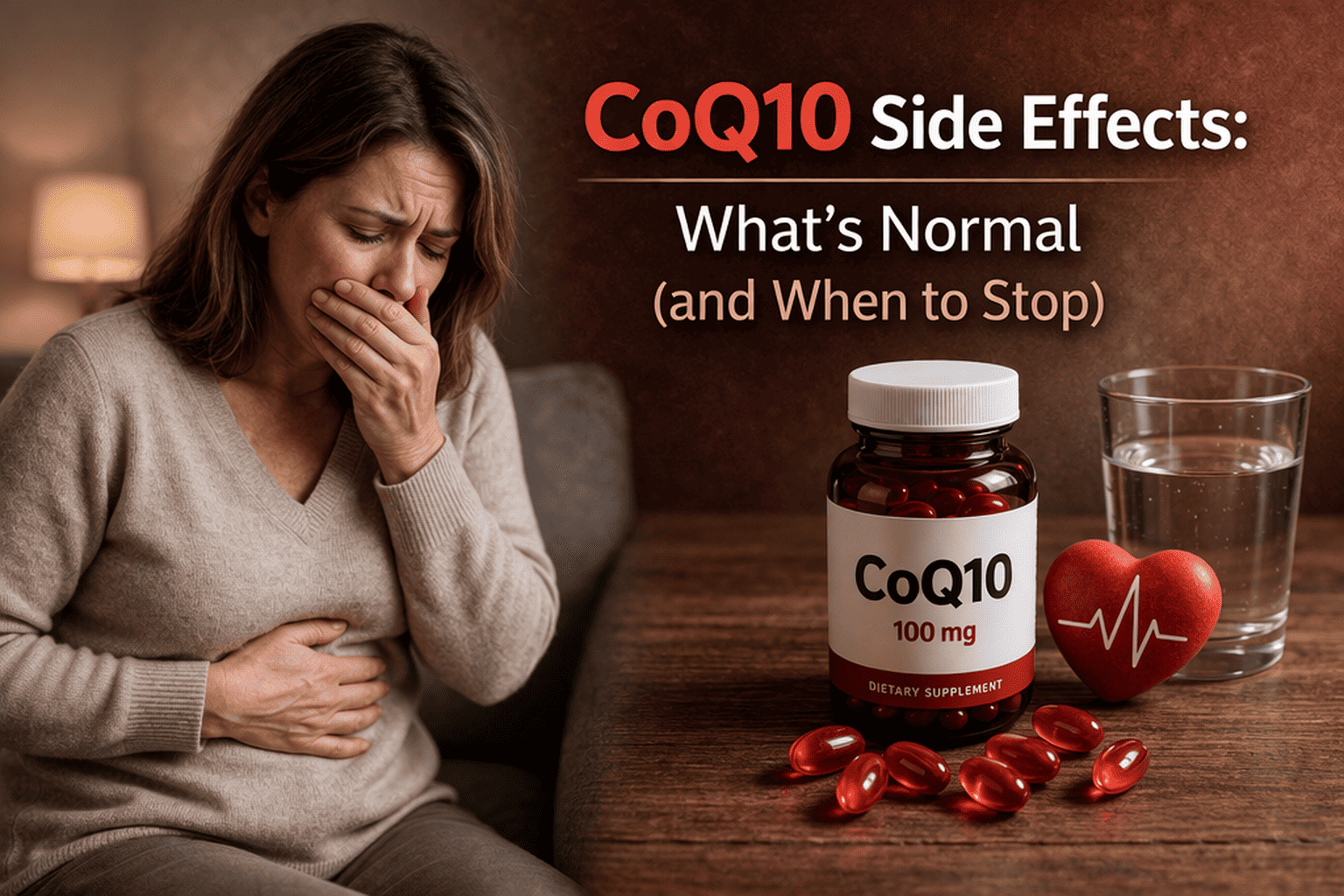
CoQ10 Side Effects: What’s Normal (and When to Stop)
Most CoQ10 side effects are mild if they happen at all. The usual pattern is nuisance-level stomach upset, nausea, loose stool, or occasional sleep disruption rather than anything severe.
What matters more is knowing the difference between a tolerability issue you can fix and a situation where you should stop. If symptoms are mild, taking CoQ10 with food, lowering the dose, or moving it earlier in the day often helps. If you take warfarin, insulin or other glucose-lowering medication, theophylline, or you are in active cancer treatment, this becomes a medication-safety question, not just a supplement-comfort question.
This page focuses on side effects, stop rules, and interaction red flags; if you are deciding whether CoQ10 is worth taking in the first place, use the broader benefits guide.
Key terms: CoQ10, coenzyme Q10, ubiquinone, ubiquinol, stomach upset, diarrhea, insomnia, warfarin interaction
Quick Take
CoQ10 is generally well tolerated. The most common side effects are mild digestive symptoms and occasional insomnia, while the situations that deserve the most caution are medication interactions and symptoms that are intense, persistent, or clearly out of proportion.
TL;DR decision
If CoQ10 only causes mild stomach upset, nausea, loose stool, or a slightly wired feeling, first try taking it with a meal, cutting the dose, or moving it to the morning. Stop and get clinician input if you take warfarin, diabetes medication, theophylline, or cancer therapy, or if you develop severe GI symptoms, allergic-type symptoms, bleeding concerns, or symptoms that do not settle after a short retry.
Evidence standard: human trials, dose ranges, guideline-level sources when available
Who this is for: adults using CoQ10 who want to know whether a side effect is mild, fixable, or a reason to stop
Who this is not for: anyone with acute chest pain, fainting, severe allergic symptoms, significant bleeding, or people self-managing CoQ10 alongside blood thinners, glucose-lowering medication, or cancer treatment without clinical oversight
Reviewed by: VerifiedSupps Editorial Team
Last reviewed: March 27, 2026
Parent Hub
CoQ10 Benefits: A Simple Science-Based Guide
Use the broader CoQ10 guide if you want the full benefits, mechanism, and who-it-makes-sense-for picture before you troubleshoot side effects.
CoQ10 side effects decoder
This is the fastest way to sort a mild tolerability issue from something that deserves a real stop-and-check decision.
| If this happens | Usually normal? | What to try first | When to stop |
|---|---|---|---|
| Mild nausea, heartburn, or stomach discomfort | Often yes | Take it with a real meal, lower the dose, or split the dose | If it becomes intense, lasts more than a short retry window, or keeps returning |
| Loose stool or diarrhea | Sometimes | Reduce dose, take with food, or change formulation | If it is persistent, dehydrating, or clearly worsening |
| Trouble sleeping or feeling oddly stimulated | Can happen | Move it to the morning and avoid large late-day doses | If insomnia keeps repeating even after dose and timing changes |
| Bleeding concerns, unstable INR, low-blood-sugar symptoms, or chemotherapy questions | No self-test territory | Pause and talk to your clinician or pharmacist | Do not keep experimenting on your own |
Best next step (today): If your symptoms are mild, retry CoQ10 at 100 mg or less with breakfast or dinner that contains some fat; if medications are part of the picture, do not troubleshoot this like a simple supplement mismatch.
Is CoQ10 safe and what side effects are normal?
For most adults, CoQ10 appears to be a low-risk supplement with mainly mild side effects when side effects happen at all. The most commonly reported issues are digestive upset, nausea, diarrhea, headache, dizziness, fatigue, or mild sleep disturbance rather than anything severe or dangerous.
Mechanism
- CoQ10 is fat-soluble, so large doses or empty-stomach use can be harder on the gut.
- Because it supports mitochondrial energy production, some people report a mildly stimulating or wakeful effect, especially later in the day.
- The more important real-world risk is not routine nausea; it is interaction risk or using a dose and formulation your body clearly does not tolerate.
What would change my recommendation
If you take warfarin or another blood thinner, insulin or other glucose-lowering medication, theophylline, or you are in active chemotherapy or radiation treatment, I would move from self-testing to clinician-guided use. I would also be more cautious if you have a history of reacting strongly to supplements or have ongoing unexplained GI symptoms before starting CoQ10.
What dose of CoQ10 is most likely to cause side effects?
Side-effect risk usually rises with bigger doses, larger single servings, and empty-stomach use. Many people do fine in the 100 to 200 mg per day range, while jumping straight to 200 to 300 mg or more can be a rougher test if you are side-effect-prone.
A clean starting point for tolerability is usually 100 mg once daily with food. If you need more, step up gradually instead of forcing a big dose on day one. If you are already taking 200 to 300 mg or more and feel nauseated, loose-stooled, headachy, or wired, the dose itself may be the problem more than the ingredient.
Practical rule: if a side effect begins after a dose increase, the smartest first move is to return to the last dose that felt normal instead of assuming you need a different supplement entirely.
When should you take CoQ10 to reduce side effects?
Take CoQ10 with a meal, preferably one that contains some fat, if you want the best shot at smoother tolerance. If CoQ10 seems to make you feel alert or disrupts sleep, move it earlier in the day rather than taking it at night.
If you use a higher total daily amount, splitting it into two smaller doses is often easier on the stomach than taking one large softgel all at once. This is especially useful for people who do not feel bad enough to stop, but clearly do not feel good enough to keep doing the same thing.
Simple timing rule: breakfast or lunch is usually the safest default. Dinner can work for some people, but it is not the best first choice if sleep is already fragile.
Can CoQ10 interact with warfarin, insulin, or cancer treatment?
Yes, and this is where CoQ10 stops being just a comfort question. The most important interaction flags are warfarin and other anticoagulation concerns, insulin or other glucose-lowering therapy, and active cancer treatment where your oncology team may want tighter control over everything you add.
Warfarin is the big one to respect. Reports suggest CoQ10 can alter anticoagulation response, which means a harmless-looking supplement trial can turn into a medication-management issue. CoQ10 may also lower blood glucose in some people, so diabetes medication users should treat dizziness, sweating, shakiness, or unusual weakness more seriously.
Bottom line: if medications are involved, do not use side-effect testing as your main safety system. Use your clinician or pharmacist instead.
When should you stop CoQ10 immediately?
Stop CoQ10 and get help sooner rather than later if symptoms feel clearly beyond a mild tolerability issue. This includes severe vomiting or diarrhea, fainting, chest pain, troubling palpitations, allergic-type symptoms such as swelling or breathing difficulty, or anything that feels like a medication interaction rather than a supplement nuisance.
If you are on warfarin or another blood thinner, unusual bruising, bleeding, or unstable clotting follow-up should not be brushed off. If you are on glucose-lowering medication, symptoms that sound like hypoglycemia deserve a pause and proper follow-up, not another supplement experiment.
A good rule is simple: mild symptoms that improve with food, dose reduction, or morning timing are one category. Symptoms that are intense, persistent, escalating, or medication-linked are a different category and should be treated that way.
Why does CoQ10 make me feel weird or upset my stomach?
Most of the time, “CoQ10 makes me feel weird” comes down to one of four things: too much too fast, taking it without food, taking it too late in the day, or using a formulation that your stomach does not love. That is good news, because those are usually fixable.
Common mistakes
- Starting at 200 to 300 mg instead of testing a lower dose first
- Taking CoQ10 on an empty stomach or with a very light snack
- Taking it late in the day when you are already prone to light sleep or nighttime wakefulness
Clean test protocol
| Inputs | Use one CoQ10 product only, 100 mg once daily, with breakfast or lunch that contains some fat. Do not add new supplements at the same time. |
|---|---|
| Duration | Run the test for 5 to 7 days before changing anything, unless symptoms are clearly not tolerable. |
| 3 metrics | Track stomach comfort, bowel changes, and sleep quality. If medications are involved, track anything that could reflect bleeding or low blood sugar. |
| Stop conditions | Stop if symptoms are severe, clearly worsening, do not settle with food and timing changes, or raise interaction concerns. |
How to tell it’s working
You are not looking for a dramatic feeling. The first sign of a good fit is usually simple: you stop noticing the supplement in a negative way. No stomach complaints, no sleep disruption, no new “wired” feeling, and no medication-related concerns is a successful tolerability result.
Red flags / seek care
Seek medical care urgently for chest pain, severe shortness of breath, fainting, facial swelling, or significant bleeding. Get clinician input promptly if you take warfarin, diabetes medication, or cancer treatment and symptoms suggest a drug-supplement interaction.
Is ubiquinol easier on the stomach than ubiquinone?
Sometimes yes in the real world, but the evidence is not strong enough to say ubiquinol is automatically gentler for everyone. Tolerance often comes down more to dose, timing, meal context, and product formulation than to the label alone.
If you feel bad on one product, switching forms is reasonable after you first fix the basics: lower the dose, take it with food, and move it earlier in the day. Do not assume a more expensive product will solve a dose or timing problem that you have not corrected yet.
Simple rule: troubleshoot the setup first, then the form. That keeps you from paying more for what is really a preventable tolerability mistake.
Selected Professional References
These are the main sources used to anchor the side-effect pattern, interaction cautions, and practical stop rules in this guide.
Coenzyme Q10
Authoritative federal overview of CoQ10 safety, including the common mild side effects and key interaction cautions.
Used for: safety baseline, insomnia and digestive upset, warfarin and insulin caution
Coenzyme Q10
Useful for the real-world adverse-effect pattern and for clarifying that clinically meaningful liver injury has not been convincingly linked to CoQ10.
Used for: GI symptoms, headache, dizziness, fatigue, liver-safety context
Coenzyme Q10
Practical clinical summary of common adverse effects, higher-dose tolerability, and medication-interaction concerns.
Used for: dose range, insomnia, rare adverse effects, interaction overview
Coenzyme Q10
Helpful for a conservative oncology-facing view of CoQ10 side effects and interaction concerns with blood thinners, theophylline, and cancer treatment.
Used for: nausea, diarrhea, appetite loss, warfarin, theophylline, oncology caution
Go Deeper (VerifiedSupps Guides)
If you want to tighten dose, form, or product selection after sorting the side-effect question, these are the next pages that make the most sense.
CoQ10 Dosage Guide
Use this if the main question is how much CoQ10 to take without overshooting your tolerance.
Ubiquinol vs Ubiquinone
Best next read if you are wondering whether a different CoQ10 form may feel better or fit you better.
Best CoQ10 Supplements
Useful when the real issue may be softgel quality, delivery system, or choosing a cleaner product.
How to Choose Supplements Without Guesswork
Good fit if you want a calmer way to evaluate labels, dosing logic, and product quality before trying again.
Final Takeaway
CoQ10 side effects are usually mild and manageable, not dramatic. If your symptoms improve with food, lower dosing, or morning timing, that is usually a tolerability problem. If medications are involved or the symptoms are strong, persistent, or clearly off-pattern, stop and treat it like a safety question instead of pushing through.
FAQ
What are the most common CoQ10 side effects?
The most common side effects are mild digestive upset, nausea, diarrhea, headache, dizziness, fatigue, and occasional insomnia or a wired feeling.
Can CoQ10 cause insomnia?
Yes, some people notice sleep disruption or extra alertness, especially with larger doses or when CoQ10 is taken later in the day.
Can CoQ10 cause stomach pain or nausea?
Yes. Mild stomach discomfort and nausea are among the more common tolerability issues and often improve when CoQ10 is taken with food.
Is diarrhea normal when starting CoQ10?
It can happen and is usually mild, but ongoing diarrhea, dehydration, or worsening GI symptoms are good reasons to stop and reassess.
Should I take CoQ10 with food?
Yes. Taking it with a meal, especially one that contains some fat, is usually the best default for both tolerance and absorption.
Can CoQ10 interact with warfarin?
Yes. If you take warfarin, CoQ10 should not be treated like a casual add-on supplement. Get clinician or pharmacist guidance before using it.
Can CoQ10 affect blood sugar?
It may lower blood glucose in some people, which is why anyone using insulin or other glucose-lowering medication should be more careful.
Is ubiquinol easier on the stomach than ubiquinone?
Sometimes, but not predictably enough to guarantee it. Dose, timing, meal context, and product formulation often matter more.
How long should I wait before stopping if side effects do not improve?
If symptoms are mild, a short 5 to 7 day retry with food, lower dose, and morning timing is reasonable. If symptoms are intense, persistent, worsening, or medication-linked, stop sooner.
VerifiedSupps Medical Disclaimer
This content is for informational and educational purposes only and is not medical advice. CoQ10 does not replace diagnosis, medication management, or individualized care. Use extra caution if you take warfarin or other blood thinners, insulin or other glucose-lowering medication, theophylline, or you are receiving chemotherapy or radiation therapy. Severe symptoms, allergic-type reactions, significant bleeding concerns, fainting, chest pain, or clearly worsening symptoms should be treated as medical issues, not normal supplement adjustment.